
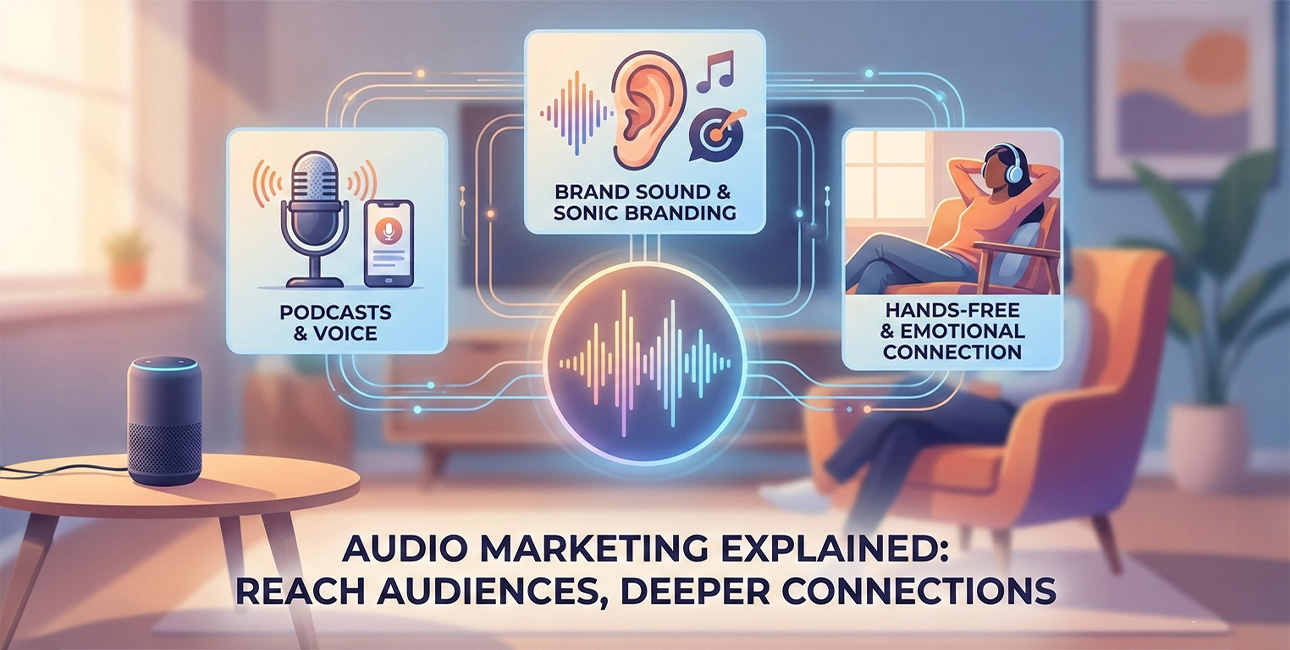
As screens become more crowded and attention spans shorter, audio has emerged as one of the most powerful and personal marketing channels. Audio marketing allows brands to reach audiences hands-free, screen-free, and distraction-light, creating deeper emotional connections than many visual formats can achieve.
From podcasts and voice search to sonic branding, audio is no longer a niche—it’s a strategic channel for modern digital marketing.
What Is Audio Marketing?
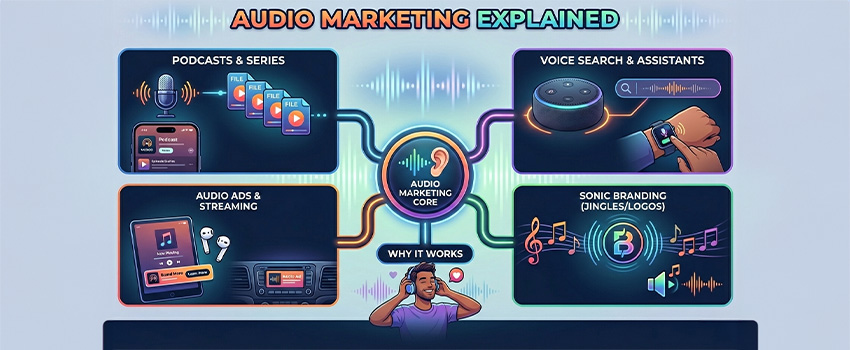
Audio marketing is the use of sound-based content to communicate a brand’s message, values, and identity. It includes:
- Podcasts and branded audio series
- Voice search and voice assistants
- Audio ads and streaming placements
- Sonic branding (brand sounds, jingles, audio logos)
Audio marketing works because it feels intimate and conversational, allowing brands to speak directly into the listener’s world.
Why Audio Marketing Is Growing
Audio meets audiences where visual content cannot.
Several factors are driving the rise of audio:
- Multitasking behavior (listening while commuting, working, or exercising)
- Growth of smart speakers and voice assistants
- Increased podcast adoption across all age groups
- Desire for authentic, long-form content
Audio fits naturally into people’s lives, allowing them to stay informed, entertained, or inspired without demanding their full visual attention. This accessibility makes audio a powerful medium for building consistent engagement and creating deeper, more personal connections with audiences across diverse contexts and lifestyles.
Podcasts: Building Authority Through Voice
Why Podcasts Work
Podcasts allow brands to:
- Share expertise and insights in depth
- Build trust through consistent, human conversation
- Reach niche, highly engaged audiences
Listeners often spend 20–60 minutes per episode, making podcasts one of the highest-attention formats available.
Types of Podcast Strategies
Context matters more than ever. Instead of tracking users across sites, contextual advertising places ads based on the content a user is consuming — increasing relevance without invading privacy.
- Branded podcasts (owned shows)
- Sponsored podcast placements
- Guest appearances on relevant industry shows
Success depends on value, consistency, and storytelling—not promotion.
Voice Marketing: Being Found When People Speak
Voice assistants like Alexa, Siri, and Google Assistant have changed how people search.
Voice searches are:
- Conversational
- Question-based
- Intent-driven
Optimizing for voice means:
- Using natural language
- Answering specific questions clearly
- Structuring content for quick responses
Voice marketing focuses on being the best answer, not just ranking on a screen.
Sonic Branding: Creating a Sound Identity
Just as visuals define brand recognition, sound shapes memory by creating emotional associations that linger long after the message is delivered. A distinctive voice, tone, or audio cue can instantly trigger recognition, reinforce trust, and evoke specific feelings, often more subconsciously than visuals alone.
Sonic branding includes:
- Audio logos
- Brand intro/outro sounds
- Consistent tone and voice style
Strong brand sound:
- Increases recall
- Builds emotional connection
- Creates consistency across platforms
Over time, these auditory elements become embedded in the audience’s mind, strengthening brand recall and helping brands stand out in crowded, fast-moving environments.
When done well, people recognize your brand before they even see it.
Audio Ads & Streaming Platforms
Audio advertising on platforms like Spotify and podcast networks allows:
- Targeted messaging based on interests and behavior
- Non-intrusive ad experiences
- High recall due to focused listening
Short, clear, and authentic messages perform best.
Measuring Audio Marketing Success
Key performance indicators include:
- Listener growth and retention
- Completion rates
- Brand recall and lift
- Engagement and conversions
While harder to measure than clicks or immediate conversions, audio often drives strong brand loyalty and long-term impact by building familiarity and trust over time. Repeated exposure to voices, stories, and sound cues creates a sense of intimacy that audiences associate with credibility and authenticity. This sustained emotional connection may not always translate into instant metrics, but it significantly influences brand preference, recall, and decision-making in the long run.
The Future of Audio Marketing
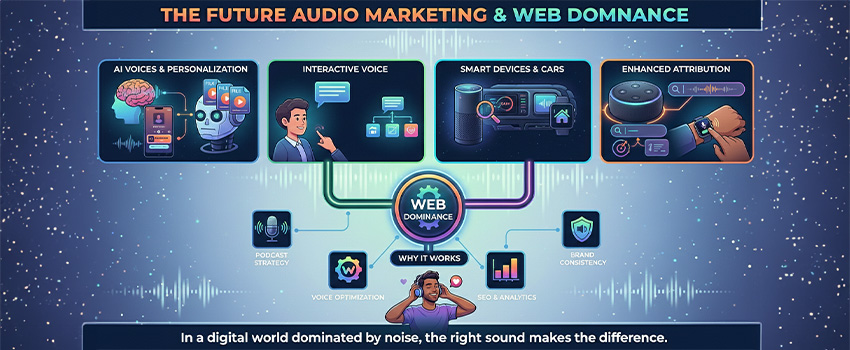
Audio marketing continues to evolve with:
- AI-generated voices and personalization
- Interactive voice experiences
- Integration with smart devices and cars
- Enhanced attribution models
Brands that invest early in audio build a lasting competitive advantage.
Conclusion
Audio marketing works best when it’s aligned with a clear strategy and strong brand identity.
Web Dominance helps businesses develop and integrate audio marketing into their digital strategy—from podcast positioning and content planning to voice optimization and brand consistency. By combining storytelling, SEO, and performance insights, Web Dominance ensures your audio presence strengthens brand recognition, builds trust, and supports long-term growth.
In a digital world dominated by noise, the right sound makes all the difference.