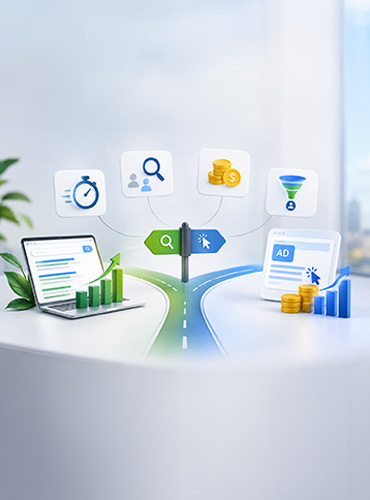
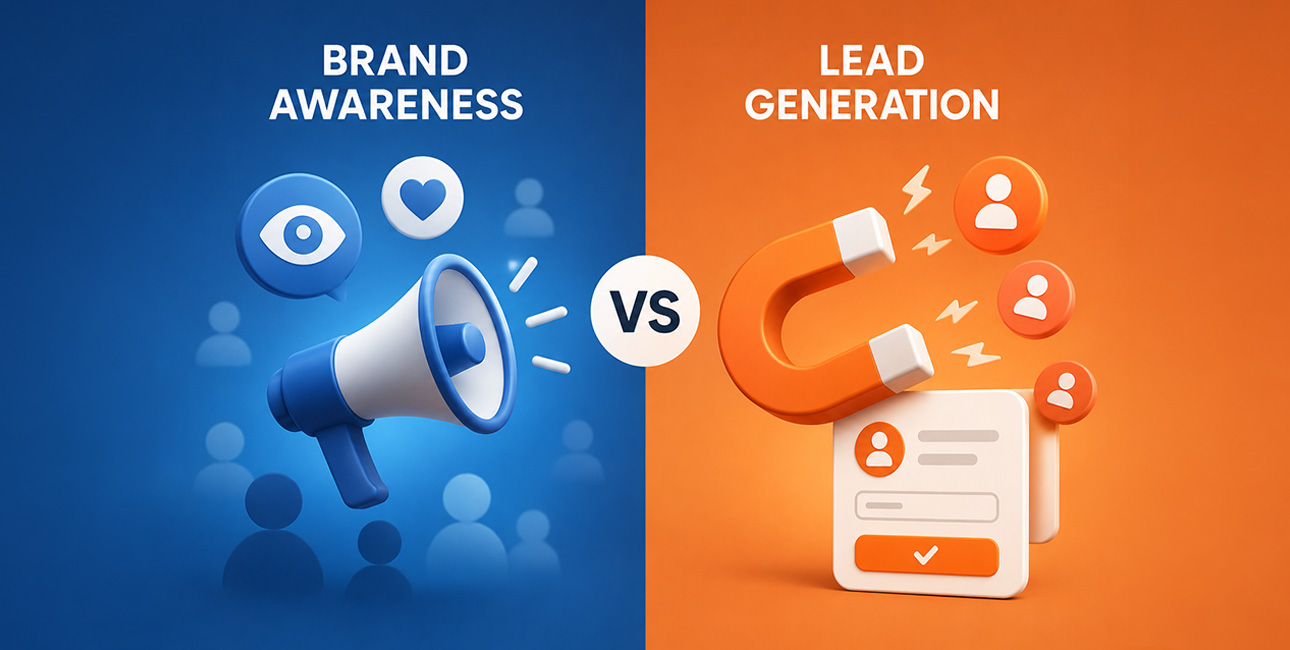
One of the biggest challenges businesses face today is deciding where to invest their marketing resources: building brand awareness or generating leads.
On one side, companies want immediate results — more inquiries, more sales opportunities, and measurable ROI. On the other side, marketers understand that long-term growth requires trust, visibility, and a strong brand presence.
This creates a common question:
Should you focus on making more people know your brand, or should you focus on converting existing demand into leads?
The answer is not as simple as choosing one over the other.
Brand awareness and lead generation serve different purposes within the customer journey. Brand awareness builds recognition and trust, while lead generation turns interest into measurable business opportunities. Successful companies usually combine both strategies based on their growth stage, industry, audience behavior, and business goals.
For businesses investing in digital marketing, SEO, content marketing, paid advertising, and conversion optimization, understanding how these two strategies work together is essential.
What Is Brand Awareness?
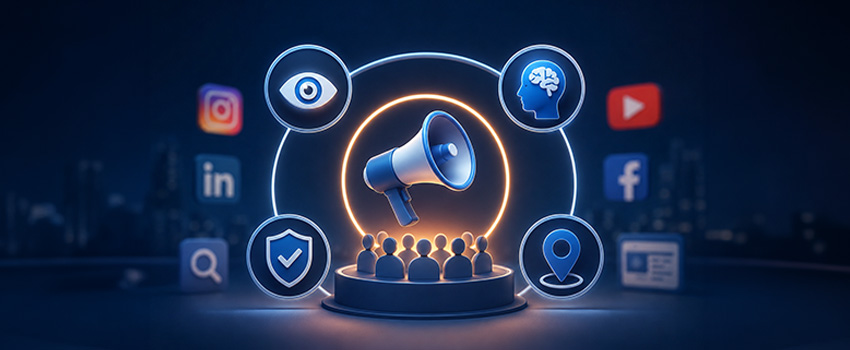
Brand awareness refers to how familiar your target audience is with your company, products, or services.
It answers questions like:
- Do people recognize your brand?
- Do customers remember your company when they need a solution?
- Does your audience associate your brand with expertise and trust?
- Are you visible where your customers spend time?
A company with strong brand awareness is more likely to be considered when customers are ready to make a purchasing decision.
For example, when someone needs digital marketing services, they may not immediately contact the first agency they discover. Instead, they usually choose a company they have seen multiple times through:
- Blog articles
- Social media content
- Search results
- Industry discussions
- Recommendations
- Case studies
Brand awareness creates familiarity before the buying moment.
Why Brand Awareness Matters
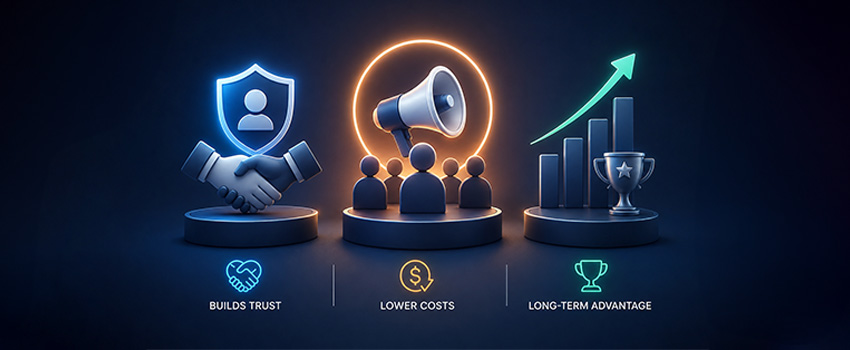
1. Builds Trust Before the Sales Conversation
Modern buyers rarely make decisions after seeing one advertisement or visiting one website.
They research.
They compare companies.
They look for expertise.
A strong brand presence helps businesses become trusted resources rather than unknown vendors.
When customers already recognize your brand, sales conversations become easier because you are not starting from zero.
2. Reduces Customer Acquisition Costs Over Time
Companies that rely only on paid advertising often face increasing costs.
Every new customer requires another click, another impression, or another campaign investment.
Brand awareness creates organic demand.
When people actively search for your company, remember your content, or recommend your services, you reduce dependency on paid acquisition channels.
3. Creates Long-Term Competitive Advantage
Products and services can often be copied.
A strong reputation cannot.
Businesses with high brand recognition have an advantage because customers associate them with:
- Expertise
- Reliability
- Quality
- Industry authority
This is especially important in competitive markets where multiple companies offer similar solutions.
How to Measure Brand Awareness
Unlike lead generation, brand awareness is not always measured through direct conversions.
Common brand awareness metrics include:
Brand Search Volume
Are more people searching for your company name over time?
Increasing branded searches often indicate growing recognition.
Website Traffic Growth
Especially:
- Direct traffic
- Organic traffic
- Returning visitors
A growing number of visitors who already know your company indicates stronger awareness.
Social Media Engagement
Important signals include:
- Shares
- Comments
- Mentions
- Followers
- Engagement rates
Content Performance
Measure:
- Blog traffic
- Backlinks
- Content shares
- Time spent on pages
- Returning readers
High-quality educational content is one of the strongest tools for building authority.
What Is Lead Generation?

Lead generation focuses on turning potential customers into identifiable prospects.
The goal is simple:
Capture interest and create opportunities for sales.
A lead can be someone who:
- Fills out a contact form
- Requests a consultation
- Downloads a guide
- Registers for a webinar
- Signs up for an email newsletter
- Requests pricing information
Lead generation moves customers from awareness into action.
Why Lead Generation Matters
1. Creates Measurable Business Opportunities
Unlike awareness campaigns, lead generation directly connects marketing activity with sales potential.
Businesses can track:
- Number of leads
- Cost per lead (CPL)
- Lead quality
- Conversion rate
- Revenue generated
This makes lead generation attractive for companies focused on short-term growth.
2. Supports Sales Teams
A strong lead generation strategy provides sales teams with qualified prospects.
Examples include:
- B2B companies receiving demo requests
- SaaS companies collecting trial registrations
- Agencies receiving consultation requests
- E-commerce businesses capturing customer information
3. Helps Optimize Marketing Performance
Lead generation campaigns provide valuable data:
- Which channels produce results?
- Which audiences convert?
- Which offers perform best?
- Which content attracts buyers?
This data helps improve future campaigns.
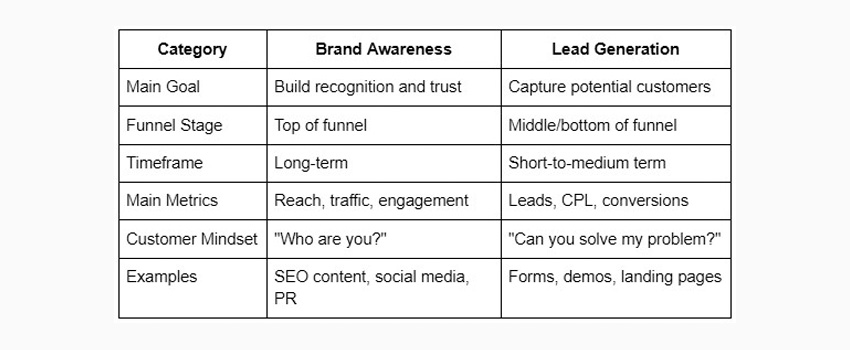
Brand Awareness vs Lead Generation: Key Differences
Should You Prioritize Brand Awareness or Lead Generation?
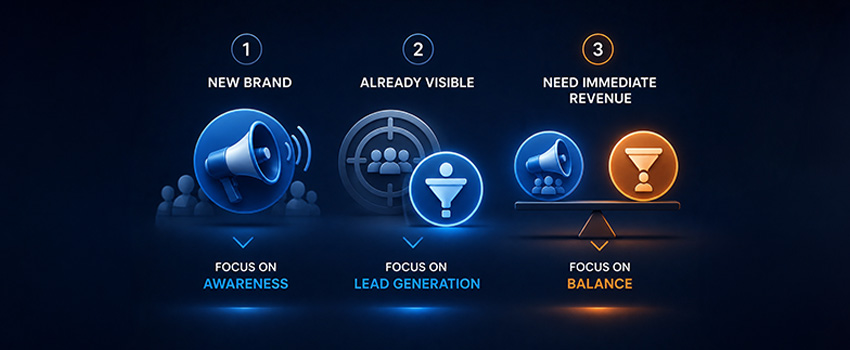
The right answer depends on your business situation.
Situation 1: Your Brand Is New → Prioritize Awareness
If your company is entering a new market, people first need to know:
- Who you are
- What you offer
- Why they should trust you
Launching aggressive lead generation campaigns without awareness can be inefficient because customers may not recognize or trust your brand.
For new companies, a strong foundation usually includes:
- SEO strategy
- Educational content
- Social media presence
- Industry thought leadership
- Case studies
- Brand storytelling
Situation 2: You Already Have Visibility → Increase Lead Generation
If your company already receives:
- Website traffic
- Brand searches
- Social media presence
- Organic visibility
but struggles to convert visitors into customers, lead generation should become a priority.
Focus on:
- Landing page optimization
- Conversion rate optimization (CRO)
- Email campaigns
- Paid search campaigns
- Lead magnets
- Strong calls-to-action
Situation 3: You Need Immediate Revenue → Balance Both
Businesses often cannot wait months or years for brand building.
A practical approach is combining:
Short-Term Lead Generation
Using:
- Google Ads
- LinkedIn campaigns
- Email outreach
- Conversion-focused landing pages
with:
Long-Term Brand Growth
Using:
- SEO
- Content marketing
- Social media
- Authority building
This creates both immediate opportunities and future demand.
Why Businesses Should Not Choose Only One
A common mistake is treating brand awareness and lead generation as competitors.
They are not.
They work together.
Brand awareness creates demand.
Lead generation captures demand.
Without awareness:
- Ads become more expensive
- Customers hesitate
- Conversion rates decrease
Without lead generation:
- Attention does not become revenue
- Marketing impact becomes difficult to measure
A successful marketing strategy connects both stages.
How to Combine Brand Awareness and Lead Generation in a Digital Marketing Strategy
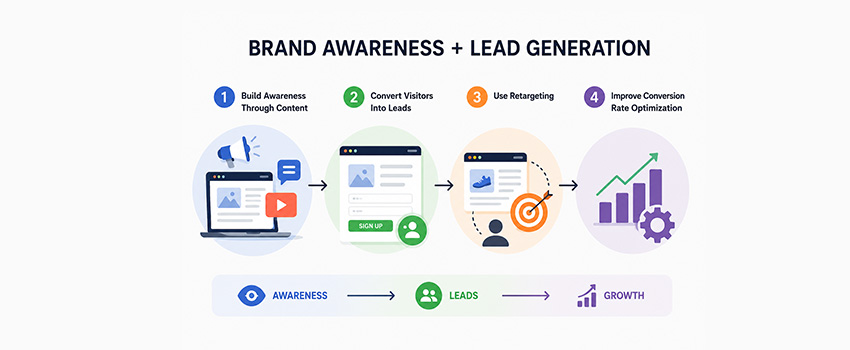
Step 1: Build Awareness Through Content
Create content that answers customer questions.
Examples:
- Blog articles
- Guides
- Videos
- Research reports
- Case studies
For example, a digital marketing agency can publish content about:
- SEO trends
- AI search optimization
- Website conversion strategies
- Content marketing frameworks
This attracts potential customers before they are ready to buy.
Step 2: Convert Visitors Into Leads
Once people discover your brand, create conversion opportunities.
Examples:
- Free consultations
- Downloadable resources
- Website audits
- Email newsletters
- Strategy calls
Every visitor should have a clear next step.
Step 3: Use Retargeting
Many people do not convert during their first interaction.
Retargeting helps reconnect with:
- Website visitors
- Content readers
- Video viewers
- Previous leads
This bridges awareness and conversion.
Step 4: Improve Conversion Rate Optimization
Generating traffic is only half the process.
Businesses should optimize:
- Website structure
- Messaging
- CTAs
- Forms
- Page speed
- User experience
A strong brand with poor conversion paths loses opportunities.
Recommended Marketing Budget Allocation
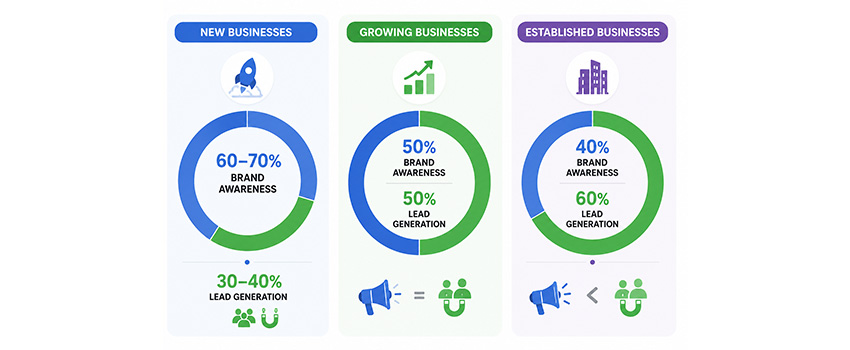
There is no universal formula, but businesses can use these guidelines:
New Businesses
60–70% Brand Awareness
30–40% Lead Generation
Focus on building recognition first.
Growing Businesses
50% Brand Awareness
50% Lead Generation
Balance growth and revenue.
Established Businesses
40% Brand Awareness
60% Lead Generation
Use existing reputation to generate more opportunities.
Common Mistakes Businesses Make
Mistake 1: Running Lead Ads Without Building Trust
Cold audiences often need education before purchasing.
Mistake 2: Measuring Awareness Only Through Sales
Brand building takes time.
Expecting immediate revenue from every awareness activity creates unrealistic expectations.
Mistake 3: Creating Awareness Without Conversion Paths
Traffic is valuable only when visitors have opportunities to engage further.
Mistake 4: Ignoring Existing Demand
Some companies invest heavily in branding while neglecting people already searching for their services.
Final Answer: What Should You Prioritize?
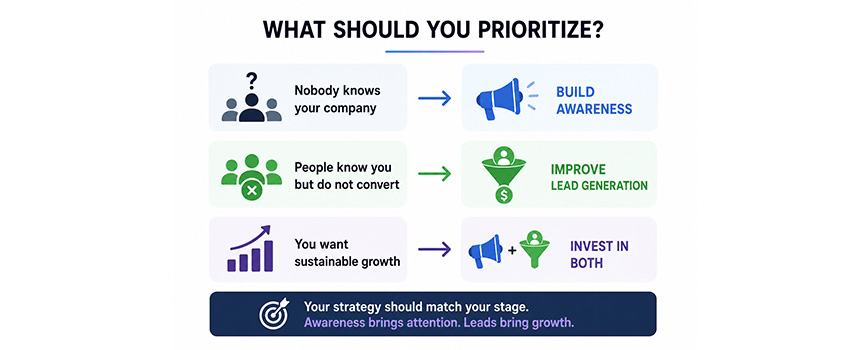
The best strategy is not choosing between brand awareness and lead generation.
The priority depends on your current business stage.
- If nobody knows your company → build awareness.
- If people know you but do not convert → improve lead generation.
- If you want sustainable growth → invest in both.
The strongest brands combine visibility with conversion.
They make customers aware of their solutions, build trust through valuable content, and create clear paths from interest to purchase.
For businesses competing online, the winning formula is:
Brand Awareness creates demand. Lead Generation captures demand. Together, they create predictable growth.
At Web Dominance, businesses can combine strategic branding, SEO, content marketing, paid campaigns, and conversion optimization to build visibility and generate qualified leads.
A successful digital marketing strategy does not focus only on traffic or only on sales — it creates a complete system where awareness turns into opportunities and opportunities turn into revenue.