

The healthcare industry has changed dramatically.
Patients no longer just rely on word-of-mouth or doctor referrals; instead, most healthcare journeys now begin online. Whether someone needs a dentist, a specialist surgeon, or a mental health professional, their first stop is almost always a search engine, social media platform, or review site.
This shift has completely rewritten the playbook for patient acquisition. Healthcare marketing isn’t just about promoting services anymore—it’s about building genuine trust, educating the public, and creating a seamless digital experience that makes it easy for patients to take action.
Today, quality of care is only half the battle. To stand out and grow sustainably, healthcare organizations must also compete on accessibility, credibility, and digital presence.
Here is a guide to the healthcare marketing strategies that actually drive patient growth.
Why Healthcare Marketing Is Different
Healthcare marketing differs significantly from marketing in most other industries.
Patients are not purchasing a product.
They are making decisions that directly affect their health, well-being, finances, and quality of life.

As a result, healthcare marketing must prioritize:
- Trust
- Expertise
- Credibility
- Transparency
- Patient education
- Long-term relationships
Unlike ecommerce businesses that can drive immediate purchases, healthcare organizations often need to nurture trust before patients schedule appointments.
Successful healthcare marketing focuses on becoming the trusted solution patients turn to when they need care.
Understanding the Modern Patient Journey
Before developing a healthcare marketing strategy, providers must understand how patients make decisions today.
A typical patient journey often includes:
Stage 1: Problem Awareness
The patient notices symptoms or becomes aware of a health concern.
Examples include:
- Back pain
- Tooth discomfort
- Skin conditions
- Anxiety symptoms
- Vision problems
At this stage, patients begin researching information online.
Stage 2: Information Gathering
Patients search for:
- Causes
- Symptoms
- Treatment options
- Specialists
- Local providers
This is where educational content becomes critical.
Stage 3: Provider Evaluation
Patients compare:
- Websites
- Reviews
- Credentials
- Treatment approaches
- Location
- Pricing information
Trust signals heavily influence decisions.
Stage 4: Appointment Booking
The patient chooses a provider and schedules a consultation.
A smooth booking process often determines whether a conversion occurs.
Healthcare marketing should support every stage of this journey.
1. Build a Patient-Focused Website
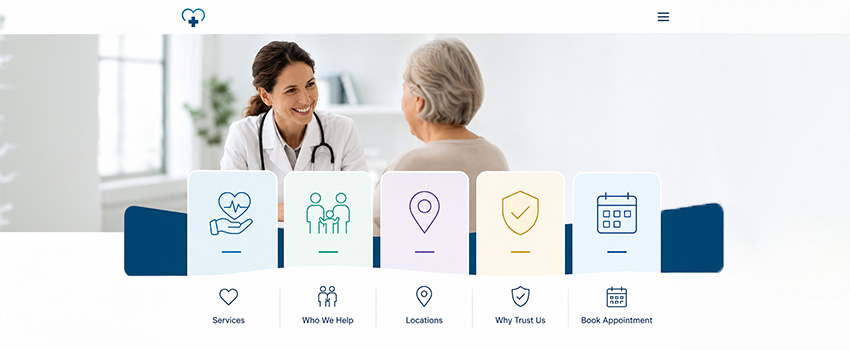
Your website is often the first impression potential patients have of your practice.
Unfortunately, many healthcare websites are outdated, difficult to navigate, or focused primarily on the provider rather than the patient.
A modern healthcare website should answer key patient questions immediately:
- What services do you offer?
- Who do you help?
- Where are you located?
- Why should patients trust you?
- How can appointments be scheduled?
Essential elements include:
Clear Service Pages
Each treatment or service should have a dedicated page.
Examples:
- Dental implants
- Physiotherapy
- Cosmetic dermatology
- Orthopedic surgery
- Mental health counseling
Mobile Optimization
Most healthcare searches now occur on mobile devices.
Online Booking
Patients increasingly expect instant scheduling options.
Fast Loading Speeds
Slow websites often result in lost opportunities.
Strong Calls-to-Action
Every page should guide visitors toward booking an appointment.
A well-designed website functions as both a marketing platform and a patient acquisition system.
2. Invest in Healthcare SEO
Search engine optimization remains one of the most effective long-term patient acquisition strategies.
When patients search for healthcare services, providers appearing on the first page of search results gain significant visibility and trust.
Healthcare SEO focuses on increasing visibility for searches such as:
- Dentist near me
- Physical therapist in [city]
- Best dermatologist for acne
- Orthopedic surgeon consultation
- Private medical clinic
A successful healthcare SEO strategy includes:
Local SEO
Most healthcare searches have local intent.
Patients typically look for providers within their geographic area.
Key local SEO activities include:
- Google Business Profile optimization
- Local citations
- Location pages
- Local backlinks
- Review management
Service-Based SEO
Target treatment-specific keywords.
Examples:
- Invisalign treatment
- Sports injury rehabilitation
- Pediatric dental care
Content Marketing
Educational content helps attract patients early in the research phase.
SEO provides one of the highest long-term returns on investment for healthcare organizations.
3. Create Educational Content That Builds Trust

Healthcare decisions are often driven by information.
Patients want answers before making appointments.
Educational content positions healthcare providers as trusted experts while attracting organic traffic.
Effective content formats include:
Blog Articles
Examples:
- Causes of chronic back pain
- Signs you may need physical therapy
- How often should you visit a dentist?
Treatment Guides
Comprehensive resources explaining procedures and outcomes.
Video Content
Visual explanations often improve patient understanding.
Frequently Asked Questions
Address common concerns before consultations.
Patient Resources
Downloadable guides and educational materials.
The objective is not to sell services immediately but to help patients make informed decisions.
Trust built through education frequently leads to higher conversion rates.
4. Optimize Your Google Business Profile
Google Business Profiles have become one of the most influential patient acquisition tools.
When patients search locally, Google often displays map results before traditional websites.
An optimized profile should include:
- Accurate contact information
- Business hours
- Service descriptions
- Photos
- Appointment links
- Frequently updated content
Healthcare providers should actively manage their profile to maximize local visibility.
5. Build a Strong Online Reputation
Reviews play a major role in healthcare decisions.
Patients frequently compare providers based on ratings and experiences.
Healthcare organizations should develop a systematic review generation process.
Strategies include:
- Post-appointment review requests
- Automated follow-up emails
- SMS review campaigns
- Patient satisfaction surveys
A strong review profile improves:
- Trust
- Conversion rates
- Local SEO rankings
Even highly qualified providers can lose patients to competitors with stronger online reputations.
6. Use Paid Advertising Strategically
Healthcare PPC campaigns can generate patient inquiries quickly when executed properly.
Google Ads is particularly effective for high-intent searches.
Examples include:
- Emergency dentist
- Physical therapy near me
- Cosmetic dermatology clinic
- Private healthcare consultations
Successful healthcare PPC campaigns focus on:
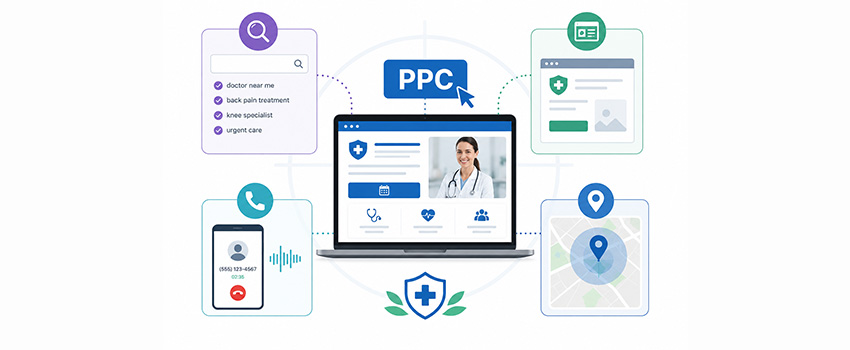
Intent-Based Keywords
Target users actively seeking treatment.
Dedicated Landing Pages
Do not send ad traffic to generic pages.
Call Tracking
Measure lead quality accurately.
Geographic Targeting
Focus on patients within service areas.
Paid advertising often works best alongside SEO rather than replacing it.
7. Develop a Local Content Strategy
Local content helps healthcare organizations dominate regional search visibility.
Examples include:
- Best pediatric care resources in [city]
- Sports injury prevention tips for local athletes
- Community health awareness campaigns
This type of content strengthens both local relevance and authority.
Local content often attracts patients who are actively searching for nearby providers.
8. Leverage Video Marketing
Healthcare services can feel intimidating.
Video helps humanize providers and build trust before consultations.
Effective healthcare video content includes:
Doctor Introductions
Allow patients to become familiar with providers.
Facility Tours
Reduce anxiety and improve comfort.
Educational Videos
Explain conditions and treatments.
Patient Testimonials
Demonstrate real experiences and outcomes.
Video content often increases engagement, website time, and appointment requests.
9. Implement Conversion Rate Optimization (CRO)
Traffic alone does not generate patients.
Conversion optimization ensures visitors take action.
Key CRO improvements include:
Simplified Forms
Reduce friction during booking.
Clear CTAs
Make next steps obvious.
Trust Signals
Display certifications, reviews, and credentials.
Mobile Usability
Ensure seamless experiences across devices.
Small improvements in conversion rates can significantly increase patient volume without increasing marketing spend.
10. Establish Authority Through Thought Leadership
Healthcare providers who consistently share expertise become trusted voices in their fields.
Authority-building activities include:
- Speaking engagements
- Medical publications
- Industry interviews
- Research contributions
- Expert commentary
Thought leadership strengthens brand perception and attracts patients seeking specialized expertise.
Common Healthcare Marketing Mistakes
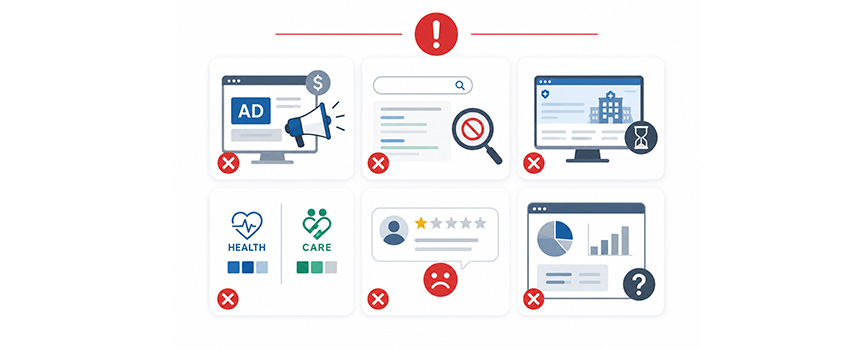
Many healthcare organizations struggle because of avoidable mistakes.
Focusing Only on Advertising
Advertising without strong foundations often produces inconsistent results.
Ignoring SEO
Patients continually search for healthcare information online.
Outdated Websites
Poor user experiences reduce trust and conversions.
Inconsistent Branding
Mixed messaging weakens credibility.
Neglecting Patient Reviews
Online reputation significantly influences decision-making.
Lack of Analytics
Without tracking, it becomes difficult to identify what generates patients.
The Future of Healthcare Marketing
Patient expectations continue to evolve.
Healthcare organizations that embrace digital transformation will be better positioned to compete.
Emerging trends include:
- AI-powered patient engagement
- Personalized healthcare marketing
- Voice search optimization
- Telehealth marketing
- Predictive analytics
- Automated patient communication
Providers that adapt to these changes will gain significant advantages in patient acquisition and retention.
Healthcare marketing is ultimately about trust.
Patients are not simply looking for services; they are looking for providers who understand their concerns, communicate clearly, and deliver confidence throughout the decision-making process.
Organizations that combine strong digital visibility, educational content, exceptional user experiences, and strategic patient acquisition systems consistently outperform competitors.
At Web Dominance, we help healthcare providers build comprehensive digital marketing strategies that increase visibility, strengthen credibility, attract qualified patients, and support long-term growth. From SEO and content marketing to website optimization, paid advertising, and conversion strategy, our focus is turning digital opportunities into measurable patient acquisition results.