
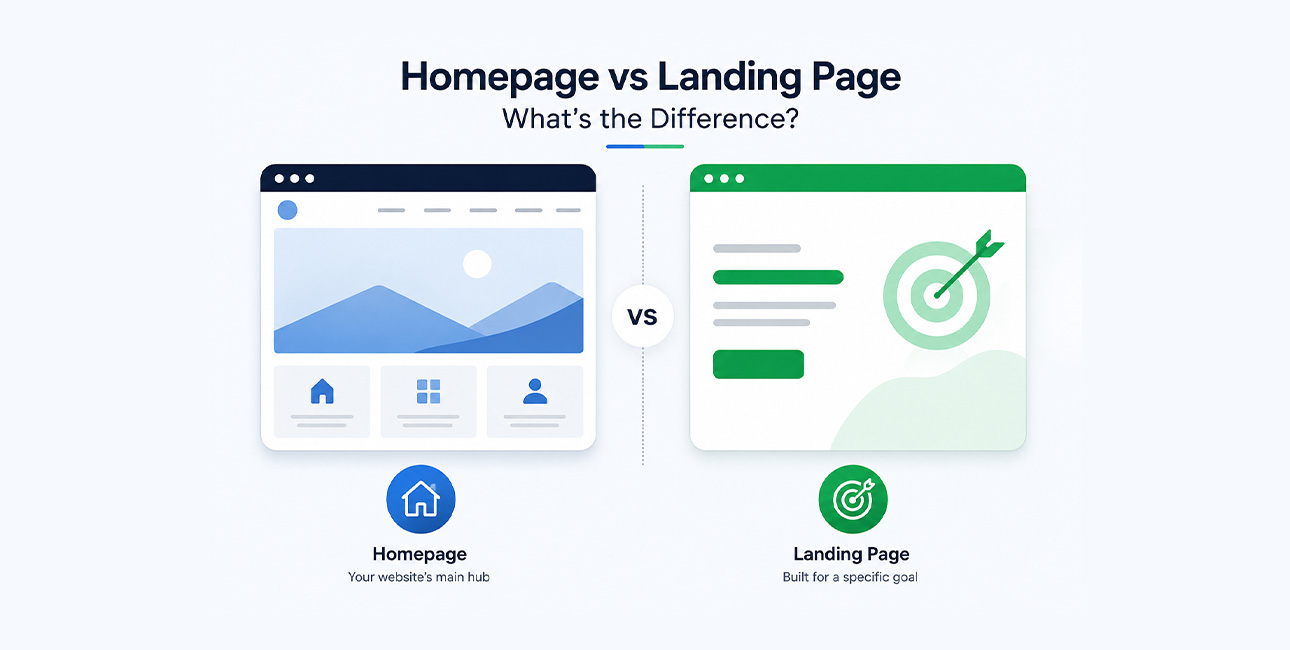
A homepage introduces visitors to your business and helps them explore different parts of your website. A landing page is designed around one specific goal, such as generating a lead, booking a consultation, downloading a resource, or encouraging a purchase.
In simple terms: a homepage helps users navigate; a landing page helps users take action.
The two can work together, but they should not be designed or measured in exactly the same way.
Homepage vs Landing Page: A Clear Comparison
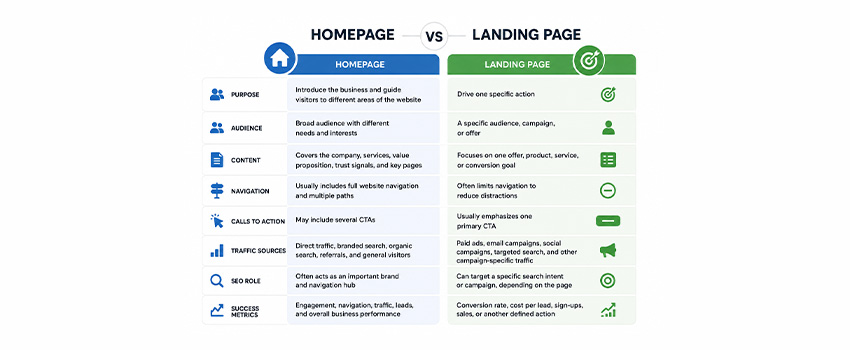
The core difference is focus. A homepage serves multiple purposes, while a landing page is usually built around one clearly defined objective.
What Is a Homepage?
A homepage is the main entry point to your website. Its job is to give visitors a clear understanding of your business and help them decide where to go next.
For example, the Web Dominance homepage introduces the agency, highlights its core services, showcases projects and client feedback, explains its approach, and directs visitors toward additional pages and contact options.
A strong homepage typically answers questions such as:
- Who are you?
- What does your business do?
- Who do you help?
- What services or products do you offer?
- Why should visitors trust you?
- Where should they go next?
Because homepage visitors can arrive with very different intentions, the page needs to support exploration.
One person may want to learn about your company. Another may be looking for SEO services. Someone else may want to see your work or contact your team.
That is why a homepage usually includes multiple sections, links, and calls to action.
What Is a Landing Page?
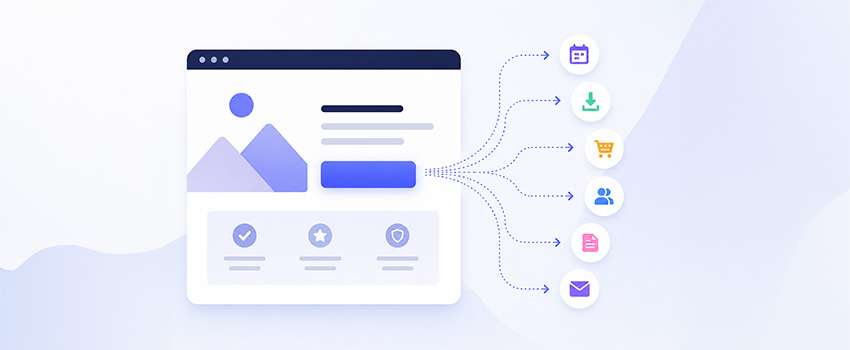
A landing page is a focused page designed to encourage visitors to complete a specific action.
That action might be:
- Requesting a consultation
- Booking a demo
- Downloading a guide
- Signing up for an event
- Purchasing a product
- Submitting a lead form
The content is built around a specific offer and audience rather than the entire business.
For example, instead of sending visitors from an ad to a general homepage, a campaign promoting SEO services could send users to a dedicated page explaining:
- The specific service
- The problem it solves
- The expected value
- The process
- Relevant proof or results
- One clear next step
Landing pages are commonly designed to reduce unnecessary distractions and keep visitors focused on the primary conversion goal.
Homepage vs Landing Page: When Should You Use Each?
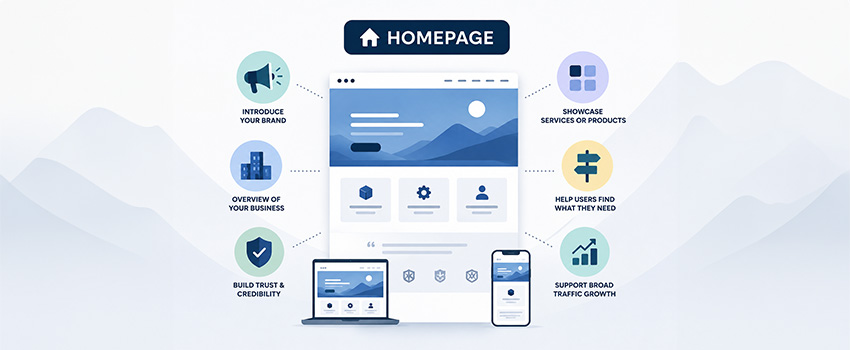
Use a Homepage When You Want to:
- Introduce your brand
- Give visitors an overview of your business
- Showcase multiple services or products
- Build trust and credibility
- Help users navigate to the information they need
- Support broad organic and branded traffic
A homepage is your digital front door.
Use a Landing Page When You Want to:
- Promote a specific service or offer
- Support a PPC or paid advertising campaign
- Generate leads
- Target a specific audience segment
- Promote a webinar, event, download, or campaign
- Measure the performance of one clear conversion action
A landing page is your campaign destination.
Why Sending Every Visitor to Your Homepage Can Be a Mistake
Imagine someone clicks an ad that says: Get a Free SEO Website Audit
If they arrive on your homepage, they may see information about SEO, content marketing, web development, PPC, case studies, and several other services.
The original message can get lost.
A dedicated landing page can continue the conversation instead:
Free SEO Website Audit
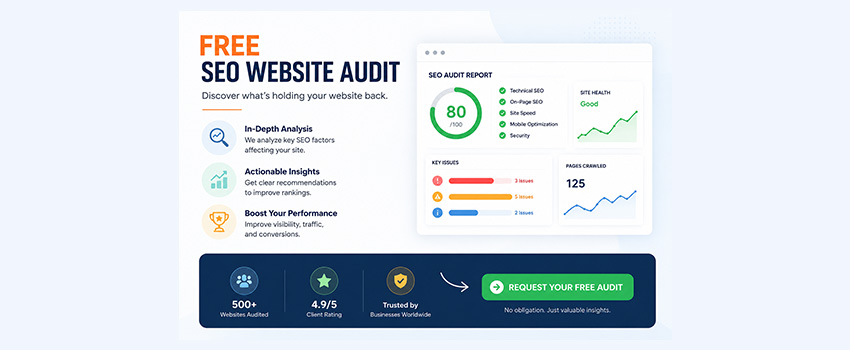
- Explain what the audit includes
- Show why it is valuable
- Add proof and credibility
- Encourage the visitor to request the audit
This creates a more direct path between the campaign message and the desired action.
That does not mean a landing page should always be used instead of a homepage. The right choice depends on the visitor’s intent and where they are in the customer journey.
How Homepage and Landing Page Design Work Together
The best strategy is usually not homepage vs. landing page.
It is homepage + landing pages.
Your homepage helps build the overall digital presence of your brand. Landing pages help turn specific campaigns and offers into measurable actions.
For example:
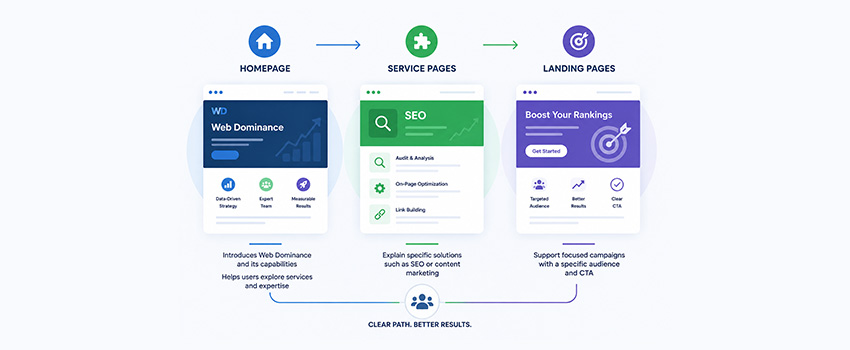
Homepage
→ Introduces Web Dominance and its capabilities
→ Helps users explore services and expertise
Service pages
→ Explain specific solutions such as SEO or content marketing
Landing pages
→ Support focused campaigns with a specific audience and CTA
This structure aligns well with Web Dominance’s approach to digital marketing, which combines strategic planning, web design and development, SEO, content marketing, and conversion optimization. The agency’s CRO approach also emphasizes behavioral analysis, landing page optimization, performance monitoring, and data-driven improvement.
What Makes a Good Homepage?
A good homepage should provide enough information for visitors to quickly understand the business without trying to explain everything in detail.
Key elements often include:
- A clear value proposition
- A short explanation of what the company does
- Core services or products
- Trust signals
- Case studies, testimonials, or results
- Clear navigation
- Relevant calls to action
It should also provide a good overall user experience across devices. Google’s guidance emphasizes factors such as mobile usability, security, Core Web Vitals, and making the main content easy for users to identify.
What Makes a Good Landing Page?
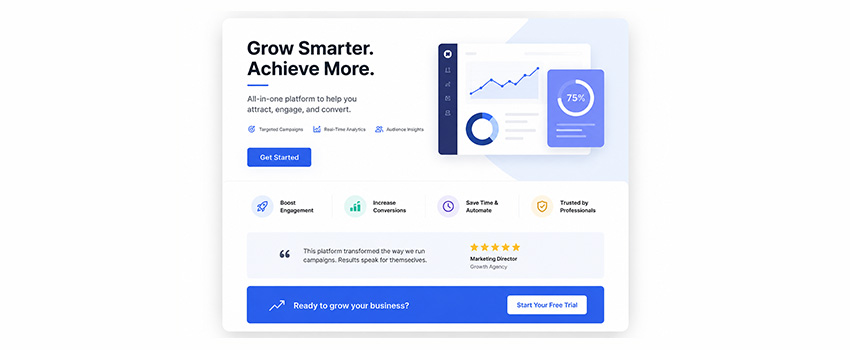
A good landing page should answer one main question:
Why should this visitor take this action now?
The page should usually include:
- A clear headline
- A focused value proposition
- Information relevant to the campaign
- Benefits and supporting details
- Proof, testimonials, or other trust signals
- A clear and visible CTA
- Minimal unnecessary distractions
The message should also match the source that brought the visitor to the page. If someone clicks an ad about a specific offer, the landing page should immediately confirm that they are in the right place.
Is a Landing Page Better for SEO?
Not necessarily.
A landing page can perform well in search when it provides useful, relevant content and matches genuine search intent. However, some landing pages are created specifically for paid campaigns, email marketing, or other targeted traffic sources.
The goal should not be to create thin pages simply to target keywords.
Instead, every page should have a clear purpose and provide value to the visitor. Google’s people-first content guidance is a useful reference for creating content that is helpful rather than designed primarily to manipulate rankings.
Final Thoughts
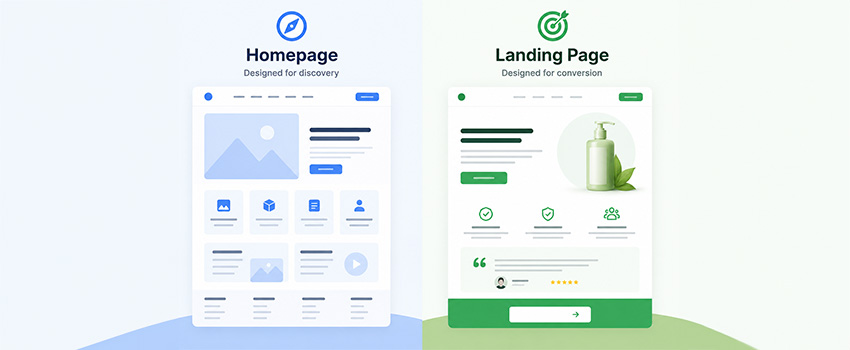
The difference between a homepage and a landing page is simple:
A homepage is designed for discovery and exploration.
A landing page is designed for focus and conversion.
Your homepage should help visitors understand your brand, explore your services, and find the information they need. A landing page should support a specific offer and guide a specific audience toward one primary action.
For the strongest digital strategy, use both. Build a clear, credible homepage that represents your brand, then create focused landing pages for high-value services, campaigns, and conversion opportunities.
That combination can help improve visibility, user experience, engagement, and conversions—the same areas Web Dominance focuses on when building tailored digital marketing strategies.