AI isn’t some far-off sci-fi concept anymore—it’s already here, and it’s changing the game for small businesses. Tasks that used to require a massive team and an even bigger budget can now be handled with smart, automated tools.
For the “little guys,” this is a massive win. AI levels the playing field, giving smaller companies the power to personalize their marketing and scale their growth just like the big brands. Digital marketing is moving fast, and those who jump in now aren’t just keeping up—they’re getting a serious head start.
What part of your marketing workflow are you looking to automate first?
Why AI Matters in Modern Digital Marketing
AI is changing digital marketing because it allows businesses to make smarter decisions using data instead of guesswork.
Traditional marketing relied heavily on manual processes — researching keywords, analyzing campaigns, creating content, and monitoring performance. AI dramatically speeds up these tasks while improving accuracy.
Today, AI helps businesses:
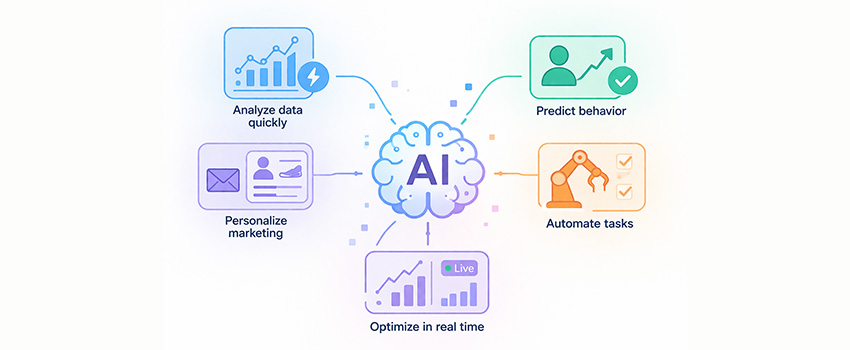
- Analyze large amounts of data quickly
- Predict customer behavior
- Personalize marketing messages
- Automate repetitive tasks
- Optimize campaigns in real time
Modern digital marketing agencies like Web Dominance use data-driven strategies that combine creativity with technology to deliver measurable results. Their services include SEO, content marketing, PPC advertising, and conversion optimization — all areas where AI plays an increasingly important role.
The Key Ways AI Is Transforming Digital Marketing
AI is not replacing marketing professionals — it is enhancing their capabilities. Below are the most important areas where AI is making a measurable impact.
1. AI-Powered Content Creation
Content remains one of the most important elements of digital marketing, but creating consistent, high-quality content can be time-consuming.
AI tools now help marketers:
- Generate blog ideas
- Draft marketing copy
- Create social media captions
- Produce product descriptions
- Optimize headlines
AI does not replace human creativity — it accelerates it.
Businesses that publish valuable content regularly build stronger brand authority and visibility. A structured content strategy increases engagement, supports SEO efforts, and helps attract new customers over time.
How This Helps Small Businesses
Small businesses often lack dedicated content teams. AI allows them to produce professional content without hiring large teams.
Benefits include:
- Faster content production
- Lower marketing costs
- Improved consistency
- Stronger online presence
2. Smarter SEO Strategies with AI
Search Engine Optimization (SEO) is one of the areas most affected by AI advancements.
AI-driven SEO allows businesses to make strategic decisions based on data instead of assumptions.
A strong SEO strategy improves search rankings, increases visibility, and attracts targeted traffic — visitors who are actively searching for your products or services.
AI-powered SEO tools can:
- Suggest keyword opportunities
- Identify ranking gaps
- Detect technical errors
- Optimize website structure
These improvements lead to better search performance and long-term growth.
3. Personalized Marketing Experiences
Personalization has become a major factor in successful marketing.
Customers expect businesses to understand their needs and preferences. AI makes this possible by analyzing behavior patterns and delivering personalized experiences.
Examples include:
- Personalized product recommendations
- Dynamic email campaigns
- Customized website content
- Targeted social media ads
Personalized marketing increases engagement because users feel understood.
Why Personalization Matters?
Personalized experiences lead to:
- Higher click-through rates
- Increased conversions
- Stronger customer relationships
- Better customer retention
AI enables personalization at scale — something that was nearly impossible in the past.
4. AI in Paid Advertising (PPC)
Pay-Per-Click advertising has become more efficient thanks to AI.
Modern PPC platforms use machine learning to:
- Optimize bids automatically
- Target the right audiences
- Adjust budgets dynamically
- Improve ad performance
AI analyzes real-time data and adjusts campaigns for maximum return on investment.
Businesses using PPC campaigns benefit from:
- Improved targeting accuracy
- Reduced ad waste
- Higher conversion rates
Effective campaign management, performance tracking, and optimization are essential for successful PPC strategies.
5. Chatbots and AI Customer Support
Customer expectations are changing. People want instant responses — anytime, anywhere.
AI-powered chatbots allow businesses to provide 24/7 support without hiring additional staff.
Chatbots can:
- Answer common questions
- Schedule appointments
- Recommend products
- Collect customer data
- Guide users through purchases
Benefits for Small Businesses
AI chatbots help:
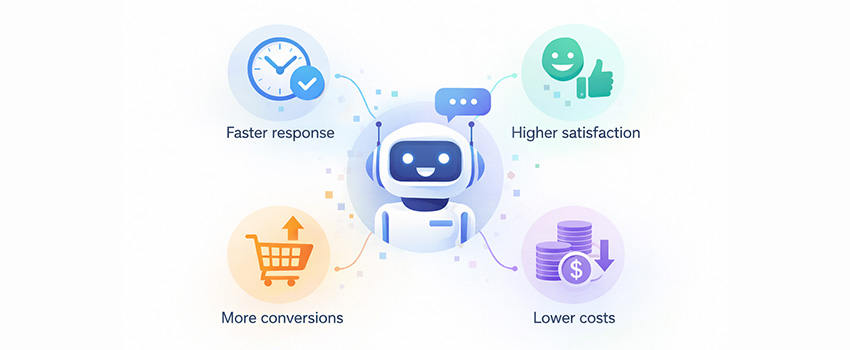
- Reduce response time
- Improve customer satisfaction
- Increase conversions
- Lower support costs
They also free up staff to focus on more complex tasks.
6. Predictive Analytics and Data Insights
AI-powered analytics tools help businesses predict future customer behavior.
Instead of reacting to trends, businesses can anticipate them.
AI analyzes:
- Customer activity
- Purchase patterns
- Website behavior
- Engagement trends
This allows businesses to:
- Identify high-value customers
- Predict future demand
- Improve marketing strategies
- Optimize pricing models
Data-driven decision-making leads to better performance and fewer costly mistakes.
7. Social Media Marketing Automation
Managing social media manually can be overwhelming.
AI tools now automate many social media tasks, including:
- Scheduling posts
- Generating captions
- Suggesting hashtags
- Analyzing engagement
- Identifying trending topics
Social media marketing strategies typically include content creation, advertising, and performance tracking — all areas where automation increases efficiency.
8. AI-Driven Conversion Rate Optimization (CRO)
Driving traffic to your website is only part of the equation. Converting visitors into customers is equally important.
AI helps optimize websites by analyzing user behavior.
Examples include:
- Heatmap analysis
- User journey tracking
- Landing page optimization
- A/B testing
A well-optimized website improves engagement and increases conversion rates.
User-friendly, fast-loading, responsive websites enhance trust and encourage users to take action.
Benefits of AI in Digital Marketing for Small Businesses
AI offers several advantages that directly impact growth and profitability.
Increased Efficiency
Automation reduces manual work and speeds up marketing processes.
Businesses can complete tasks faster and focus on strategic planning.
Reduced Marketing Costs
AI reduces the need for large teams and repetitive labor.
Small businesses can achieve professional results with fewer resources.
Improved Decision-Making
AI provides real-time insights and performance data.
Better data leads to better marketing decisions.
Enhanced Customer Experience
AI enables personalized interactions and faster responses.
Satisfied customers are more likely to return and recommend your business.
Challenges of Using AI in Digital Marketing
While AI offers many benefits, it also comes with challenges.
Understanding these challenges helps businesses implement AI successfully.
Data Quality Issues
AI depends on accurate data.
Poor data leads to inaccurate insights.
Businesses must maintain clean, organized data systems.
Over-Automation Risks
Too much automation can make marketing feel impersonal.
Human creativity and strategy remain essential.
Learning Curve
AI tools require time and training.
Businesses must invest in learning how to use them effectively.
The Future of AI in Digital Marketing
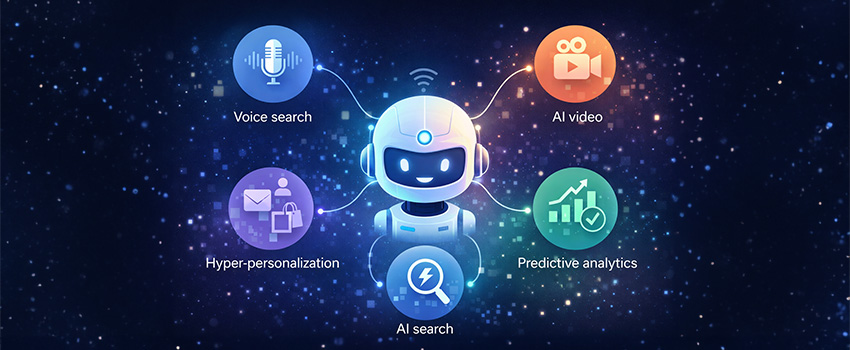
AI will continue evolving, introducing new opportunities for businesses.
Some future trends include:
- Voice search optimization
- AI-generated video content
- Hyper-personalized marketing campaigns
- Advanced predictive analytics
- AI-powered search engines
Businesses that adopt these technologies early will stay ahead of competitors.
Digital marketing strategies must evolve continuously to remain effective in a rapidly changing online environment.
How Small Businesses Can Start Using AI Today
Getting started with AI does not require advanced technical knowledge.
Here are practical steps businesses can take:
Step 1: Automate Repetitive Tasks
Start with simple automation:
- Email responses
- Social media scheduling
- Reporting tools
Step 2: Use AI for Content Creation
AI tools can help generate blog posts, ad copy, and social content.
This improves productivity and consistency.
Step 3: Implement Data Analytics
Use AI-powered analytics to track:
- Website traffic
- Customer behavior
- Conversion performance
Step 4: Optimize Your Website
Ensure your website:
- Loads quickly
- Is mobile-friendly
- Has clear navigation
These improvements increase engagement and conversions.
How Web Dominance Helps Businesses Use AI Effectively
AI tools are powerful, but success depends on strategy.
That’s where professional expertise makes a difference.
Web Dominance helps businesses integrate modern digital strategies that combine technology, creativity, and data analysis.
Their services include:
- Search Engine Optimization
- Web Design and Development
- Content Marketing
- Pay-Per-Click Advertising
- Social Media Marketing
- Conversion Rate Optimization
These services are designed to improve visibility, attract the right audience, and generate measurable results.
By analyzing your business goals and audience behavior, their team creates customized strategies that help brands increase engagement, improve search rankings, and grow sustainably.
AI Is Not the Future — It’s the Present
AI is already reshaping digital marketing, and its influence will only continue to grow.
For small businesses, this transformation presents a unique opportunity.
Those who embrace AI-driven marketing strategies will:
- Work more efficiently
- Reach customers more effectively
- Improve return on investment
- Stay ahead of competitors
Businesses that ignore AI risk falling behind in an increasingly competitive digital landscape.
The key is not just adopting AI — but using it strategically.
With the right tools, guidance, and expertise, small businesses can leverage AI to unlock new growth opportunities and achieve long-term digital success.