

Large brands often dominate advertising, have bigger marketing budgets, and employ entire teams dedicated to digital growth. At first glance, it may seem impossible for a small business to compete.
The reality is different.
The internet has fundamentally changed how customers discover, evaluate, and choose businesses. Search engines, AI-powered search experiences, local SEO, content marketing, and social media have created opportunities for small businesses to earn visibility by demonstrating expertise rather than simply spending more money.
Businesses that understand customer intent, build trust, create valuable content, and optimize their digital presence can successfully compete against organizations many times their size.
This article explores practical strategies that help small businesses increase visibility, build authority, generate qualified leads, and create sustainable online growth.
The Myth That Bigger Always Wins
Many business owners believe large companies have an unfair advantage because they can spend millions on advertising.
While larger organizations certainly have advantages—including established brand recognition, larger teams, and greater marketing budgets—they also face challenges such as slower decision-making, complex approval processes, and less personalized customer engagement.
Small businesses often possess strengths that larger competitors struggle to replicate:
- Faster adaptation to market changes
- Direct relationships with customers
- Specialized expertise
- Authentic brand stories
- Flexible marketing strategies
- Deep understanding of niche markets
Today’s digital landscape rewards relevance, quality, and trust—not just size.
According to research from Google, users increasingly expect search results to deliver the most helpful and relevant information rather than simply the biggest brands. Likewise, AI-powered search experiences emphasize content that demonstrates expertise, authority, and usefulness.
The Digital Playing Field Has Changed
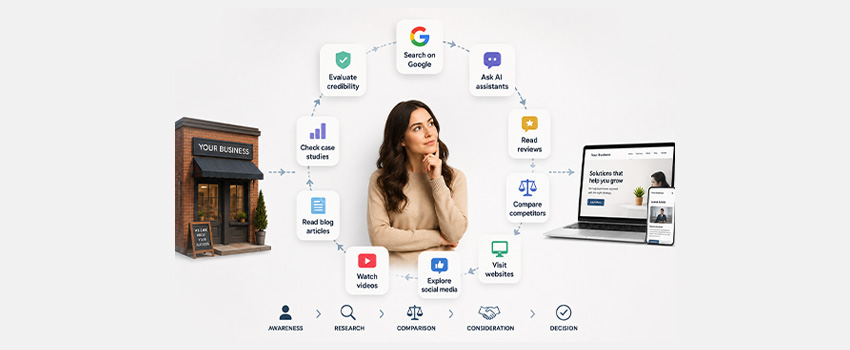
Twenty years ago, visibility often depended on advertising budgets.
Today, customers typically follow a much more complex buying journey:
- Search on Google
- Ask AI assistants
- Read reviews
- Compare competitors
- Visit websites
- Explore social media
- Read blog articles
- Watch videos
- Check case studies
- Evaluate credibility
Every interaction becomes an opportunity for a smaller business to earn trust.
Success is no longer determined solely by who spends the most—but by who provides the best customer experience throughout the buying journey.
Strategy Beats Budget
One of the biggest misconceptions in marketing is that success depends primarily on spending more money.
In reality, strategy determines how effectively every marketing dollar is used.
Consider two businesses:
Company A
- $500,000 annual marketing budget
- Generic messaging
- Weak website
- Poor SEO
- Limited content
Company B
- $50,000 annual marketing budget
- Strong SEO
- Helpful educational content
- Excellent user experience
- Highly targeted campaigns
Over time, Company B may generate significantly stronger organic growth because it continuously builds authority and attracts customers searching for relevant solutions.
Marketing efficiency often matters more than marketing volume.
Build a Strong Digital Foundation
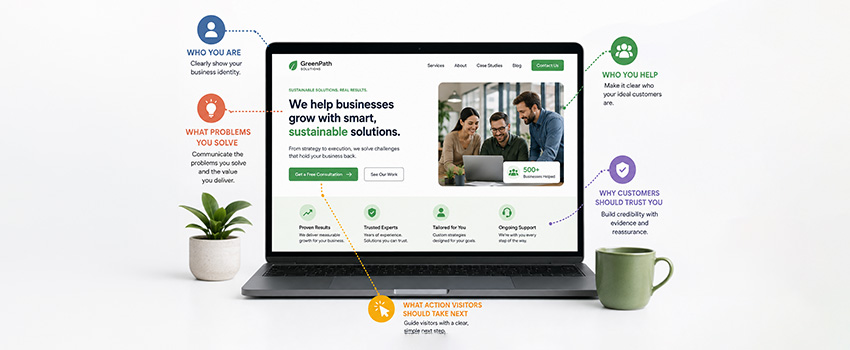
Competing online begins with having a professional digital presence.
Many small businesses invest heavily in advertising while neglecting the quality of their own websites.
Your website should clearly communicate:
- Who you are
- What problems you solve
- Who you help
- Why customers should trust you
- What action visitors should take next
Essential components include:
- Fast loading speeds
- Mobile-friendly design
- Clear navigation
- Secure HTTPS
- Professional branding
- Strong calls-to-action
- Accessible contact information
A well-designed website builds confidence before a customer ever contacts your business.
Content Marketing Levels the Playing Field
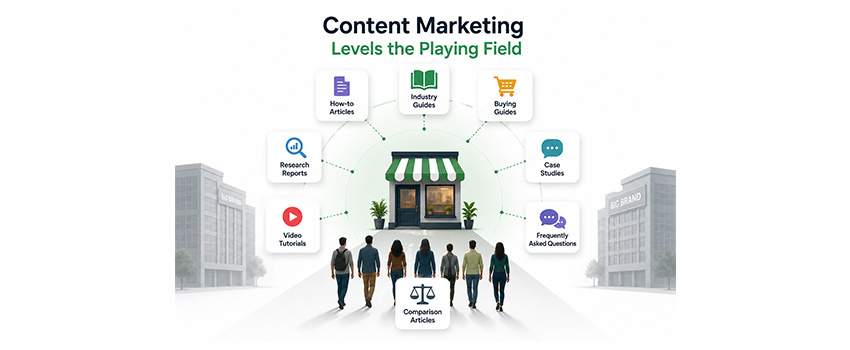
One of the greatest equalizers in digital marketing is content.
Every helpful article, guide, case study, or video becomes a long-term marketing asset.
Content allows businesses to answer customer questions before competitors do.
Examples include:
- Industry guides
- How-to articles
- Buying guides
- Case studies
- FAQs
- Research reports
- Comparison articles
Helpful content continues generating traffic long after publication.
Unlike advertisements, which stop producing results when budgets end, high-quality content can continue attracting visitors for years.
Focus on Search Intent Instead of Keywords Alone
Modern SEO has evolved beyond simply inserting keywords into web pages.
Search engines increasingly evaluate whether content genuinely satisfies user intent.
Instead of asking:
“What keyword should we rank for?“
Successful businesses ask:
“What problem is the customer trying to solve?“
For example:
Rather than targeting: “Website design“
Create comprehensive resources answering questions such as:
- How much does a business website cost?
- What features improve conversions?
- How long does redesign take?
- What mistakes reduce trust?
Answering real customer questions builds authority naturally.
Optimize for AI Search as Well as Traditional Search
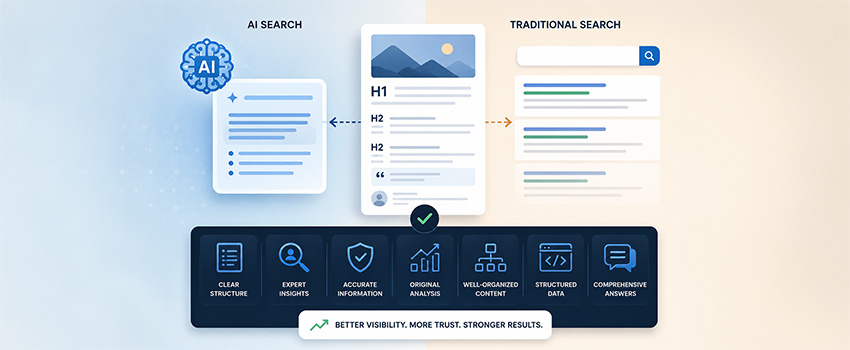
The way customers discover information is changing.
Many users now ask AI assistants questions before visiting search engines.
Businesses should therefore optimize content for both traditional SEO and AI-powered search experiences.
Helpful practices include:
- Clear article structure
- Descriptive headings
- Expert insights
- Accurate information
- Original analysis
- Well-organized content
- Structured data
- Comprehensive answers
Content that demonstrates expertise is more likely to be referenced by AI systems than shallow or duplicated content.
Local SEO Creates Significant Opportunities
Many small businesses primarily serve regional markets.
Local SEO enables these companies to compete effectively even against national brands.
Strong local optimization includes:
- Complete Google Business Profile
- Consistent business information
- Local citations
- Customer reviews
- Location-specific service pages
- Local backlinks
- Community involvement
When customers search for nearby services, relevance and proximity often outweigh company size.
Build Trust Before Selling

Trust is one of the most powerful competitive advantages available to smaller businesses.
Customers increasingly evaluate businesses before making contact.
They look for evidence such as:
- Client testimonials
- Reviews
- Case studies
- Certifications
- Awards
- Industry experience
- Expert authorship
- Company history
Every trust signal reduces uncertainty.
Leverage Customer Reviews
According to consumer research from BrightLocal, online reviews remain one of the most influential trust factors for local purchasing decisions.
Encourage satisfied customers to leave reviews across relevant platforms.
Positive reviews influence:
- Search visibility
- Customer confidence
- Click-through rates
- Conversion rates
Respond professionally to every review—including negative feedback.
Use Data to Improve Marketing Decisions
Large companies often succeed because they measure everything.
Small businesses should do the same.
Track metrics including:
- Organic traffic
- Keyword rankings
- Conversion rates
- Cost per lead
- Bounce rate
- Customer acquisition cost
- Return on investment
- Revenue by marketing channel
Data reveals where improvements create the greatest impact.
Invest in Conversion Rate Optimization

Generating traffic is only the beginning.
The real goal is turning visitors into customers.
Small improvements can produce significant gains.
Areas to optimize include:
- Landing pages
- Contact forms
- Calls-to-action
- Website speed
- Navigation
- Service pages
- Trust signals
- Mobile usability
Improving conversions often produces better ROI than simply increasing traffic.
Use Social Proof Throughout the Website
Trust grows when visitors see evidence that others have already chosen your business.
Examples include:
- Client logos
- Testimonials
- Ratings
- Awards
- Media mentions
- Partner organizations
- Success stories
- Years of experience
These signals reduce perceived risk.
Build Authority Through Thought Leadership
Rather than constantly promoting services, educate your audience.
Share:
- Industry insights
- Original research
- Expert opinions
- Market trends
- Educational webinars
- Speaking engagements
- Podcast appearances
Authority develops over time through consistent expertise.
Original Insights From the Web Dominance Team

Based on our experience working with businesses across multiple industries, we consistently observe five characteristics among companies that outperform larger competitors online:
- They publish genuinely helpful content rather than promotional material.
- They focus on solving customer problems instead of chasing search algorithms.
- They invest in long-term SEO alongside short-term campaigns.
- They continuously improve website conversion rates.
- They measure marketing performance and adapt based on data.
While individual results vary by industry, these practices consistently contribute to stronger long-term digital performance.
Research and Industry Perspectives
Research from HubSpot has shown that educational content plays a significant role in attracting and nurturing prospective customers throughout the buying journey.
Similarly, studies from Content Marketing Institute consistently demonstrate that organizations with documented content strategies are more likely to report successful marketing outcomes.
Industry guidance from Google also emphasizes creating people-first, helpful content that demonstrates expertise, experience, authoritativeness, and trustworthiness (E-E-A-T), rather than producing content solely for search rankings.
Together, these findings reinforce an important principle: sustainable digital growth comes from consistently delivering value to users.
Frequently Asked Questions
Can a small business really outrank large companies on Google?
Yes. Search rankings are determined by many factors, including content quality, search intent, technical SEO, backlinks, user experience, and topical authority. Smaller businesses frequently outrank larger competitors for niche, local, and high-intent searches by producing more relevant and helpful content.
Should small businesses invest in SEO or paid advertising?
The most effective approach usually combines both. Paid advertising can generate immediate visibility, while SEO builds long-term organic traffic and reduces dependence on advertising budgets over time.
How long does it take to compete organically?
SEO is a long-term investment. Depending on your industry, competition, website authority, and content quality, meaningful improvements often become visible within several months, while sustained growth typically develops over a longer period.
Is AI changing how small businesses compete online?
Yes. AI-powered search experiences increasingly reward comprehensive, trustworthy, and well-structured content. Businesses that combine expert knowledge with high-quality digital experiences are well positioned to benefit from these changes.
Concluding
Competing online is no longer about having the largest marketing budget.
It is about becoming the most trusted, relevant, and helpful resource for your target audience.
Small businesses possess advantages that many large organizations cannot easily replicate: agility, authenticity, specialized expertise, and closer customer relationships.
By investing in SEO, educational content, local optimization, conversion rate optimization, and long-term authority building, smaller organizations can earn visibility that rivals—and often surpasses—much larger competitors.
Digital success is not determined by company size.
It is determined by how effectively a business earns trust.