
Marketing has always evolved alongside technology.
From traditional advertising and print media to search engines, social media, automation platforms, and analytics tools, every technological shift has changed how businesses attract, engage, and retain customers.
Today, the biggest transformation is driven by Artificial Intelligence (AI).
AI is no longer just an experimental technology used by large enterprises. It has become a practical tool that helps marketing teams analyze data, create content, personalize customer experiences, automate repetitive tasks, and make faster strategic decisions.
However, the future of marketing is not about replacing marketers with machines.
The future belongs to a new model:
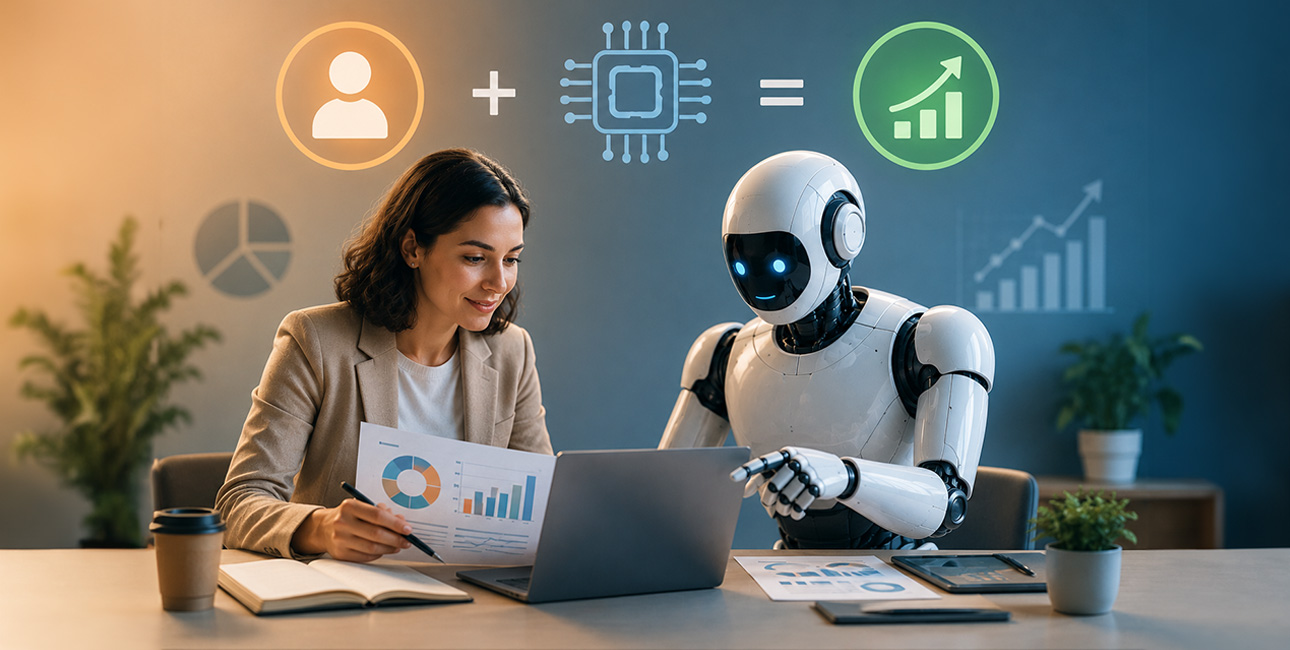
Human expertise + Artificial Intelligence = More intelligent, creative, and efficient marketing teams.
Companies that understand how to combine human creativity, strategic thinking, emotional intelligence, and AI-powered capabilities will gain a significant competitive advantage.
The Evolution of Marketing Teams
For decades, marketing teams operated through specialized roles:
- Content writers created messaging
- Designers developed visual assets
- SEO specialists optimized websites
- Data analysts interpreted campaign performance
- Advertising specialists managed paid campaigns
- Strategists developed growth plans
While these roles remain important, AI is changing how teams work.
Modern marketing professionals now collaborate with AI systems that support them across the entire marketing lifecycle:
- Research
- Strategy development
- Content creation
- Customer segmentation
- Campaign optimization
- Performance analysis
- Personalization
AI is becoming an additional team member — one that processes information quickly, identifies patterns, and assists humans in making better decisions.
What AI Can Bring to a Marketing Team
1. Faster Market Research and Customer Insights
Understanding customers has always been one of the most important responsibilities of marketers.
Traditional market research often required:
- Surveys
- Interviews
- Manual competitor analysis
- Data collection
- Customer feedback analysis
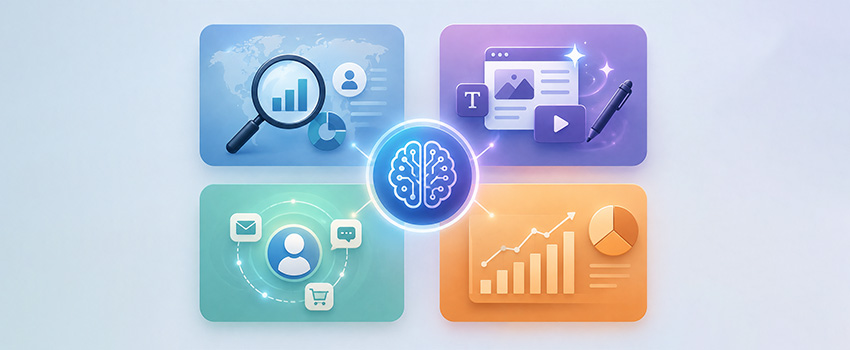
AI can accelerate this process by analyzing large amounts of information from multiple sources, including:
- Search trends
- Customer reviews
- Social media conversations
- Website behavior
- Campaign performance data
AI-powered analytics can help marketers identify:
- Customer preferences
- Emerging trends
- Audience segments
- Purchase patterns
- Content opportunities
However, AI does not replace strategic interpretation.
A machine can identify patterns, but experienced marketers understand the context behind those patterns.
2. AI-Powered Content Creation and Optimization
Content marketing has become one of the most important channels for building visibility, trust, and authority.
AI tools can support content teams by helping with:
- Topic research
- Content outlines
- First drafts
- Content optimization
- Translation
- Content repurposing
- Performance analysis
For example, AI can analyze thousands of search queries and suggest topics that match customer intent.
However, high-quality content still requires human expertise.
Successful content needs:
- Original insights
- Industry experience
- Brand voice
- Storytelling ability
- Accurate information
- Real examples
Google and other search engines increasingly emphasize helpful, reliable, people-first content. AI-generated content without expertise, originality, and value risks losing visibility.
The future is not:
AI writes everything.
The future is:
Marketers use AI to create better content faster while adding human expertise and unique perspectives.
3. Advanced Personalization at Scale
Modern customers expect personalized experiences.
They want brands to understand:
- Their needs
- Their interests
- Their challenges
- Their buying journey
Traditional personalization methods were limited because marketers had difficulty processing large amounts of customer data.
AI changes this.
AI can help businesses personalize:
- Email campaigns
- Website experiences
- Product recommendations
- Advertising messages
- Customer journeys
For example:
A visitor interested in SEO services may receive educational content about search optimization, while another visitor interested in website development may receive information about conversion-focused websites.
AI makes personalized marketing possible at a much larger scale.
4. Smarter Marketing Analytics and Decision-Making
Modern marketing generates enormous amounts of data:
- Website traffic
- Conversion rates
- Customer behavior
- Advertising performance
- Social media engagement
- Email metrics
The challenge is not collecting data.
The challenge is understanding it.
AI can help marketers:
- Detect performance patterns
- Predict customer behavior
- Identify campaign opportunities
- Forecast results
- Recommend optimization strategies
Instead of spending hours collecting reports, marketing teams can spend more time making strategic decisions.
The Human Advantage: What AI Cannot Replace
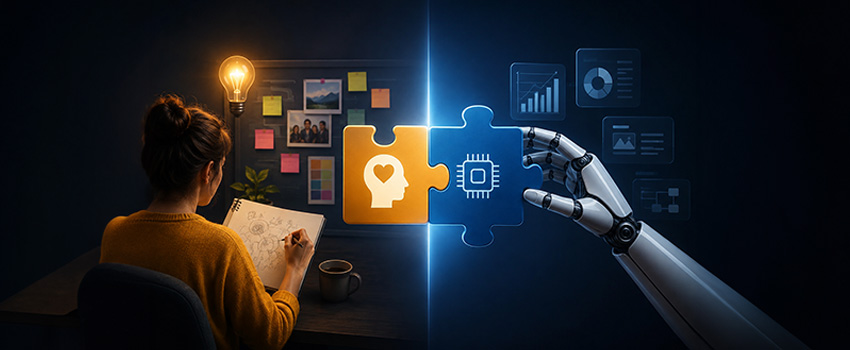
Although AI is transforming marketing, human expertise remains essential.
1. Creativity and Original Thinking
Marketing is not only about producing content.
It is about creating ideas that connect with people.
Humans understand:
- Culture
- Emotions
- Social context
- Brand personality
- Customer psychology
AI can generate options, but humans create meaningful experiences.
2. Strategic Thinking
AI can analyze information.
But marketing leaders decide:
- Which markets to enter
- Which customers to prioritize
- How brands should position themselves
- Which opportunities align with business goals
Strategy requires business understanding and judgment.
3. Emotional Intelligence
Customers do not make decisions based only on information.
They make decisions based on:
- Trust
- Confidence
- Relationships
- Values
- Experiences
Human marketers understand emotional triggers and customer motivations.
4. Brand Authenticity
Every successful brand has a unique identity.
AI can imitate patterns, but authentic brand building requires:
- Company experience
- Customer understanding
- Industry knowledge
- Human storytelling
The Future Marketing Team Structure
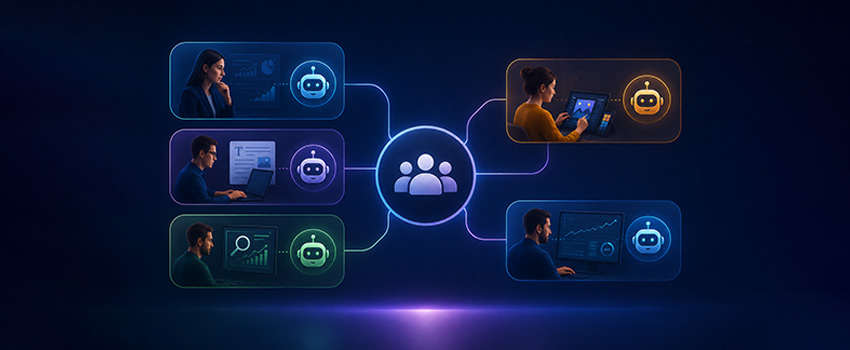
The marketing department of the future will look different.
Instead of replacing roles, AI will enhance them.
A future marketing team may include:
Marketing Strategists + AI Analytics Assistants
Humans define goals.
AI analyzes market signals and provides recommendations.
Content Specialists + AI Writing Assistants
Humans create strategy, expertise, and storytelling.
AI supports research, optimization, and production speed.
SEO Specialists + AI Search Optimization Tools
Humans develop SEO strategies.
AI helps analyze:
- Keywords
- Search behavior
- Competitor content
- Technical issues
Designers + AI Creative Tools
Humans define creative direction.
AI accelerates:
- Concept development
- Variations
- Testing
Performance Marketers + Predictive Analytics
Humans manage strategy.
AI improves:
- Budget allocation
- Audience targeting
- Campaign optimization
AI and Marketing: A Collaboration Model
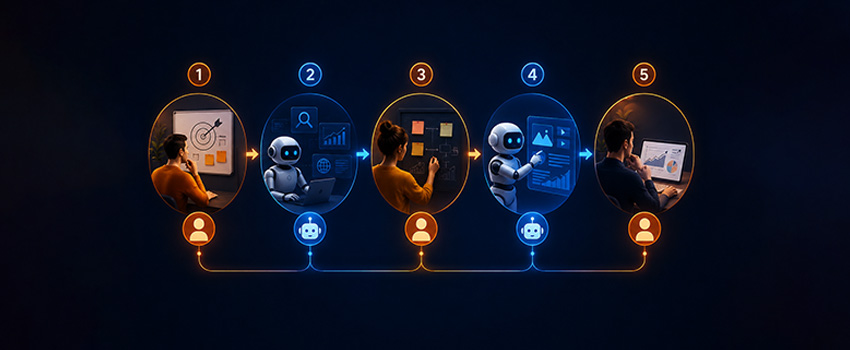
The most effective workflow is a partnership:
Step 1: Human Defines the Objective
Example:
“We want to increase qualified leads from SaaS companies”.
Step 2: AI Supports Research
AI analyzes:
- Market trends
- Competitors
- Audience behavior
- Content opportunities
Step 3: Humans Build Strategy
Marketing experts decide:
- Positioning
- Messaging
- Channels
- Campaign structure
Step 4: AI Accelerates Execution
AI helps with:
- Content drafts
- Data analysis
- Automation
- Testing
Step 5: Humans Evaluate and Improve
Marketers review results and make strategic adjustments.
Research and Industry Evidence
According to research from McKinsey & Company, generative AI has significant potential to transform marketing and sales functions by improving productivity, personalization, and customer engagement.
Industry research from Gartner has also highlighted the growing importance of AI-powered marketing technologies and automation in modern organizations.
The direction is clear:
AI will become a standard part of marketing operations.
The competitive advantage will come from companies that know how to use it effectively.
Challenges of AI-Powered Marketing
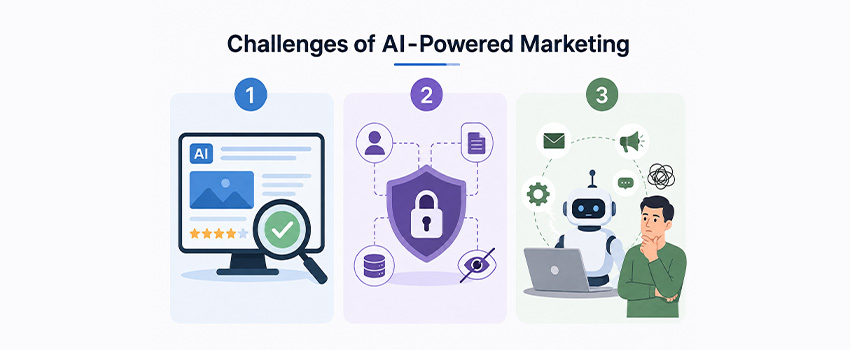
AI adoption also creates new responsibilities.
1. Maintaining Content Quality
AI-generated content must be reviewed for:
- Accuracy
- Originality
- Brand alignment
- Expertise
2. Data Privacy and Ethics
Companies must responsibly manage customer information.
Important considerations include:
- Transparency
- Data protection
- Responsible AI usage
3. Avoiding Over-Automation
Automation should improve customer experiences, not remove human connection.
Customers still value:
- Real conversations
- Authentic brands
- Expert guidance
How Companies Can Prepare Their Marketing Teams for AI
1. Train Marketers in AI Skills
Future marketers should understand:
- AI tools
- Prompt engineering
- Data interpretation
- Automation workflows
2. Create AI Guidelines
Companies should define:
- Where AI can be used
- How content is reviewed
- Data security rules
- Quality standards
3. Combine AI With Expertise
The strongest results come from combining:
- AI efficiency
- Human creativity
- Industry knowledge
- Strategic thinking
The Role of AI in SEO and Digital Marketing
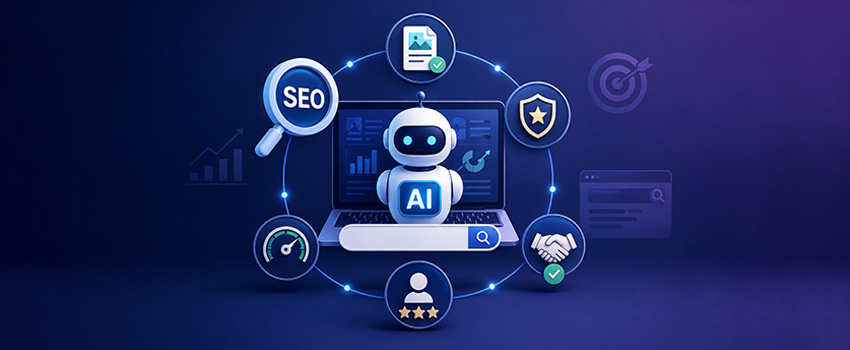
AI is also changing how businesses approach search visibility.
Search engines and AI-powered platforms increasingly evaluate:
- Content quality
- Expertise
- Authority
- Trust signals
- User experience
This means businesses need more than keyword optimization.
They need:
- Strong content architecture
- Expert-driven articles
- Structured data
- Digital authority
- Consistent brand presence
Marketing teams must optimize not only for traditional search engines but also for AI-driven discovery systems.
The Future of Marketing: Augmented Intelligence
The future is not artificial intelligence replacing human intelligence.
It is augmented intelligence — technology that enhances human capabilities.
The most successful marketing teams will be those that:
- Use AI to increase efficiency
- Use human creativity to build connections
- Use data to make smarter decisions
- Use expertise to create trust
AI will not replace great marketers.
But marketers who know how to use AI effectively will outperform those who do not.
Humans + AI Will Define the Next Generation of Marketing
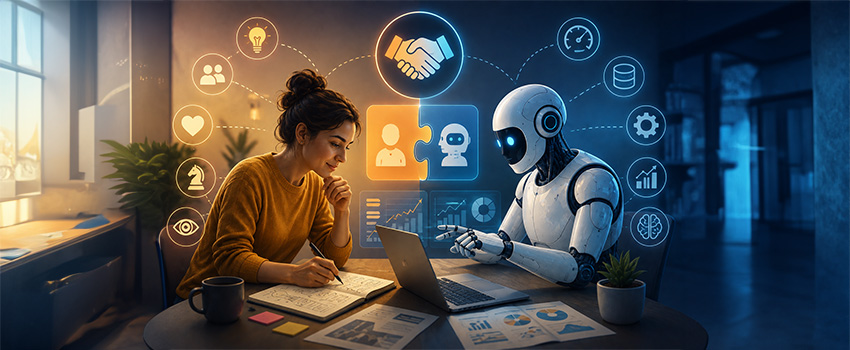
The future marketing team will not be human-only or AI-only.
It will be a collaboration.
AI will provide:
- Speed
- Data processing
- Automation
- Predictive insights
Humans will provide:
- Creativity
- Strategy
- Empathy
- Experience
- Brand vision
Businesses that embrace this partnership will create more personalized customer experiences, build stronger brands, and achieve sustainable growth.
The future belongs to marketing teams that understand one simple principle:
AI provides the power. Humans provide the purpose. Together, they create better marketing.
Web Dominance helps businesses grow through strategic digital solutions including SEO, content marketing, web development, paid advertising, and conversion optimization.
By combining human expertise with modern technologies, Web Dominance helps companies improve online visibility, attract qualified customers, and build long-term digital success.
Contact us to explore how AI-powered marketing strategies can support your business growth.