

In just a few years, AI-powered tools have transformed how businesses research topics, generate ideas, write articles, create visuals, analyze performance, and personalize customer experiences. At the same time, AI-powered search platforms such as ChatGPT, Google’s AI experiences, Perplexity, Claude, and other generative search systems are changing how people discover information online.
Some businesses see AI as an opportunity.
Others see it as a threat.
The reality is more nuanced.
AI is not replacing content marketing, it is raising the standard.
Publishing large volumes of generic content is no longer enough. As AI makes content creation easier, originality, expertise, credibility, and trust become the primary competitive advantages.
The future belongs to organizations that combine AI-powered efficiency with genuine human knowledge and experience.
Content Marketing Is Not Dying—It Is Evolving
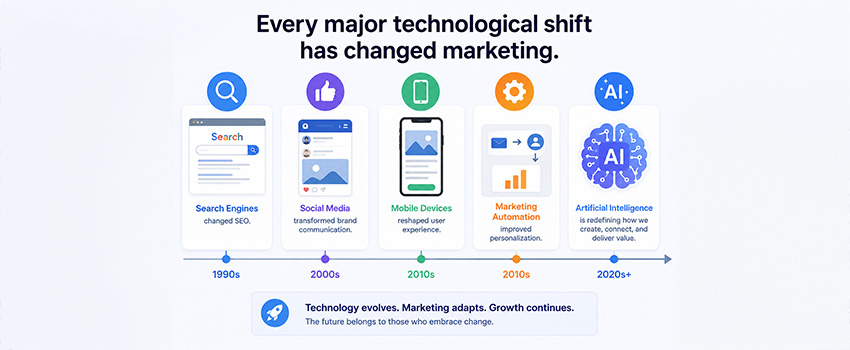
Every major technological shift has changed marketing.
- The rise of search engines changed SEO.
- Social media transformed brand communication.
- Mobile devices reshaped user experience.
- Marketing automation improved personalization.
Artificial Intelligence represents the next major evolution.
Instead of replacing marketers, AI is changing how content is researched, produced, optimized, distributed, and discovered.
Businesses that adapt early will gain long-term advantages.
Businesses that continue publishing low-value, repetitive content risk becoming invisible.
Why AI Has Changed the Rules
Modern AI tools can now:
- Generate article outlines
- Produce first drafts
- Summarize research
- Translate content
- Suggest keywords
- Analyze competitors
- Create images
- Personalize messaging
- Recommend optimization opportunities
Tasks that once required days can now be completed in hours.
However, speed alone does not create value.
As AI-generated content becomes more common, audiences and search systems are becoming better at recognizing truly useful, experience-based information.
The challenge is no longer producing more content.
The challenge is producing better content.
The New Content Economy
For many years, marketers focused on publishing as much content as possible.
Today, content abundance creates a different problem:
Information overload.
Customers now have access to thousands of articles covering nearly every topic imaginable.
The winning question has changed from: “Can we publish more?“
to: “Can we publish something genuinely worth reading?“
Future content strategies must prioritize:
- Original thinking
- Practical experience
- Research-backed insights
- Credibility
- Clear structure
- User value
Quality increasingly outweighs quantity.
AI Is Changing How People Search
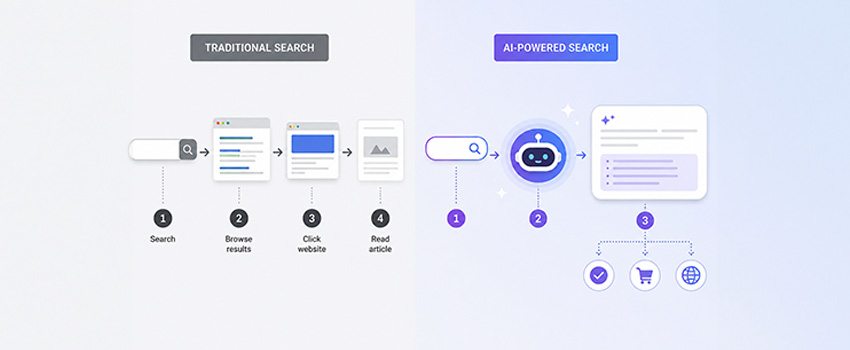
Traditional search behavior looked like this:
Search → Browse results → Click website → Read article
Today’s journey often includes AI assistants.
Users increasingly ask questions like:
- What's the best CRM for manufacturers?
- How does local SEO work?
- How can I improve website conversions?
- Which AI tools help marketers?
Instead of reviewing ten blue links, many users receive summarized answers generated from multiple trusted sources.
This creates a new challenge.
Businesses are no longer competing only for search rankings.
They are competing to become trusted sources that AI systems reference.
The Rise of AI Search Optimization
Many marketers focus exclusively on traditional SEO.
Increasingly, businesses also need to optimize for AI-driven discovery.
This requires creating content that is:
- Well structured
- Comprehensive
- Accurate
- Clearly written
- Supported by evidence
- Easy for AI systems to interpret
AI models tend to reference sources that consistently demonstrate expertise and trustworthiness.
This makes authority more valuable than ever.
Why Human Expertise Becomes More Valuable
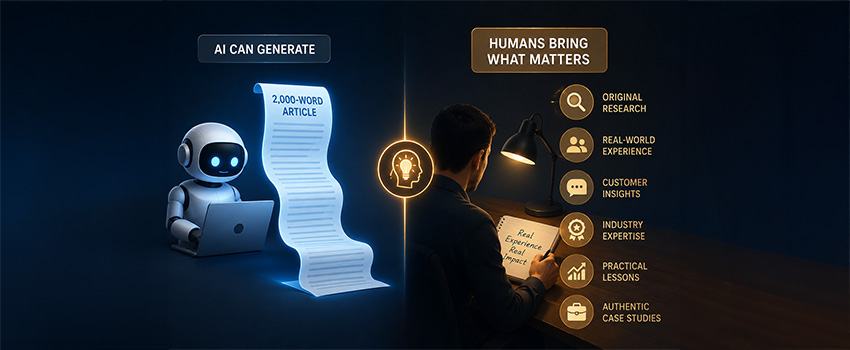
Ironically, AI increases the importance of human knowledge.
Anyone can generate a 2,000-word article using AI.
Very few can produce:
- Original research
- Real-world experience
- Customer insights
- Industry expertise
- Practical lessons
- Authentic case studies
These are increasingly becoming competitive advantages.
The future belongs to expert-driven content.
Trust Is Becoming the Most Important Ranking Factor
Whether content appears in search engines or AI-generated responses, trust increasingly influences visibility.
Strong trust signals include:
Verified Author Information
Readers and AI systems want to know:
- Who wrote the article?
- What experience do they have?
- Why should readers trust them?
Every substantial article should include:
- Author name
- Professional background
- Relevant expertise
- Links to professional profiles where appropriate
Expert Contributor Bios
Businesses should showcase subject-matter expertise.
Examples include:
- SEO specialists
- Marketing strategists
- Developers
- Designers
- Industry consultants
Expert bios strengthen credibility by demonstrating that content comes from knowledgeable professionals.
Case Studies
Real business results provide evidence that expertise extends beyond theory.
Effective case studies include:
- Business challenge
- Strategy implemented
- Timeline
- Results achieved
- Lessons learned
Specific examples build confidence.
Research and Supporting Evidence
Claims should be supported whenever possible.
High-quality sources include:
- Academic publications
- Government agencies
- Industry reports
- Original research
- Recognized industry organizations
Evidence-based content earns greater trust.
Original Data
Original insights differentiate businesses from competitors.
Examples include:
- Customer surveys
- Industry benchmarking
- Internal analytics
- Campaign performance studies
- Market research
Original data often becomes highly linkable and shareable.
Transparent Company Information
Businesses should make it easy for visitors to verify legitimacy.
Include:
- Company history
- Mission
- Leadership
- Office locations
- Contact information
- Privacy policy
- Terms of service
Transparency reduces uncertainty.
AI Cannot Replace Experience
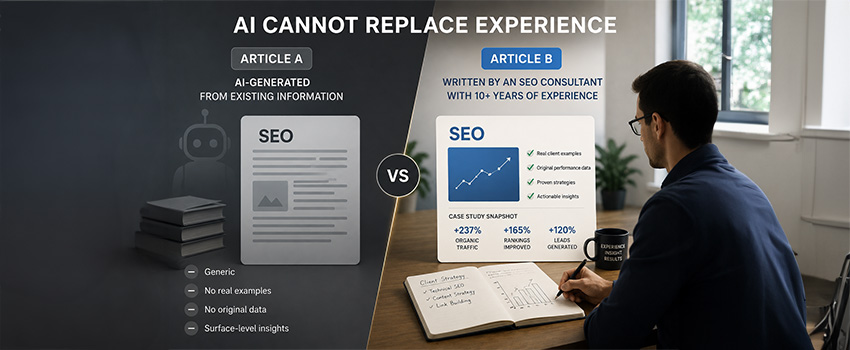
Consider two articles about SEO.
Article A:
Generated entirely using AI from existing online information.
Article B:
Written by an SEO consultant who has managed hundreds of campaigns over ten years, supported with client examples and original performance data.
Which provides greater value?
The second.
Experience creates context.
Context creates insight.
Insight creates authority.
The Shift From SEO to AI Visibility
Future content will extend beyond blog publishing.
Businesses will create complete knowledge ecosystems.
Examples include:
Educational Hubs
Comprehensive topic libraries.
Interactive Resources
- Calculators
- Assessment tools
- Templates
- Checklists
Video Learning
Educational videos increasingly complement written content.
Research Reports
Annual industry studies establish authority.
Customer Success Stories
Evidence demonstrates capability.
Community Content
Discussion, webinars, podcasts, and events strengthen brand relationships.
The Future Role of SEO
SEO is becoming less about keywords alone and more about topical authority.
Successful businesses will focus on:
- Comprehensive topic coverage
- Semantic relationships
- Internal linking
- User intent
- Technical excellence
- Helpful experiences
Instead of optimizing isolated pages, organizations will build interconnected knowledge centers.
Original Research: Web Dominance Observations
Across our client projects, we consistently observe that the strongest-performing content typically shares several characteristics:
- It answers complete customer questions rather than targeting isolated keywords.
- It includes practical recommendations that readers can immediately apply.
- It demonstrates genuine industry expertise instead of repeating widely available information.
- It is regularly updated to reflect changing technologies and user expectations.
- It supports broader business objectives, including lead generation and customer education.
While every industry differs, comprehensive, experience-based content consistently performs better over time than high-volume, low-value publishing.
Research Supporting the Future of Content Marketing
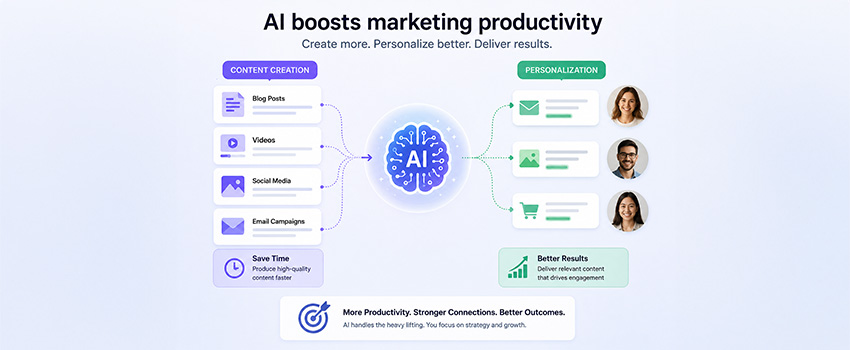
Research from McKinsey & Company suggests that generative AI has the potential to significantly improve marketing productivity, particularly in content creation and personalization.
At the same time, guidance from Google continues to emphasize creating helpful, reliable, people-first content that demonstrates experience, expertise, authoritativeness, and trustworthiness.
Research published by Content Marketing Institute consistently finds that organizations with documented content strategies and customer-focused educational content achieve stronger long-term marketing performance than those relying on ad hoc publishing.
These findings point toward the same conclusion:
Technology improves efficiency.
Expertise creates competitive advantage.
Practical Recommendations for Businesses
To remain competitive over the next several years, businesses should:
Invest in Subject-Matter Experts
Expert knowledge differentiates content.
Use AI as an Assistant
Allow AI to improve productivity—not replace strategic thinking.
Publish Original Research
Unique data creates authority.
Build Topic Clusters
Become the definitive resource for important customer questions.
Strengthen Trust Signals
Include:
- Author pages
- Expert bios
- Case studies
- Testimonials
- Company information
- Transparent contact details
Continuously Update Content
The most valuable resources evolve alongside the industries they serve.
Concluding
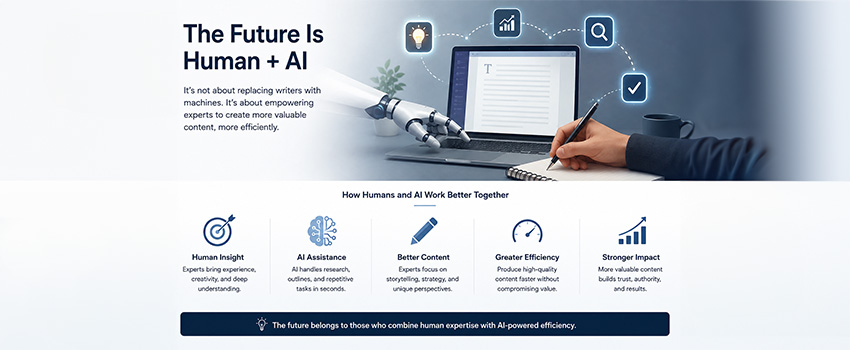
Artificial Intelligence is changing content marketing, but not in the way many people expected.
The future is not about replacing writers with machines.
It is about enabling experts to create more valuable content more efficiently.
As AI lowers the barriers to content production, originality, expertise, transparency, and trust become increasingly important.
Businesses that combine human insight with AI-powered workflows will not simply produce more content.
They will build stronger brands, earn greater credibility, and create digital assets that continue generating value for years to come.
The companies that succeed in the age of AI will be those that answer a simple question better than anyone else:
Why should customers and AI systems trust your content?