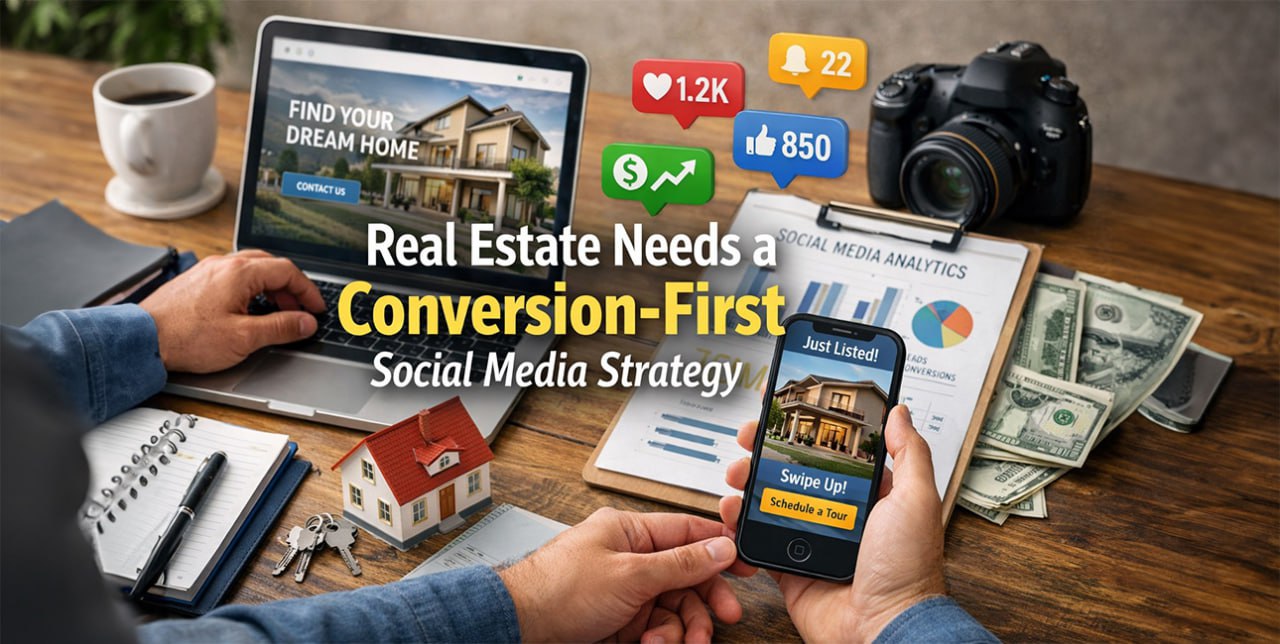
In 2026, social media isn’t simply “nice to have” — it’s at the core of how real estate buyers and sellers discover agents, explore listings, and make first contact. Platforms like Instagram, TikTok, Facebook, and LinkedIn have become virtual storefronts where attention is won, trust is built, and serious real estate interest begins.
That’s why top real estate teams are shifting to conversion-first social media strategies — strategies designed to turn attention into action. In this guide, you’ll learn why this approach matters and how to build one that works for real estate.
Social Media Is the Modern Discovery Engine — but Not a Conversion Tool on Its Own
Social media excels at visibility and engagement. Buyers scroll feeds, save property posts, view video tours, and send DMs — but platforms were not originally built to close deals.
In fact:
- Social platforms lack robust lead qualification and CRM integration.
- Engagement does not mean intent to buy or sell.
- Organic social conversion rates remain low when not tied to strategic funnels.
Agents like Vayna Jerabek may build massive followings on TikTok, but their conversions happen off-platform — on websites with automated systems and direct booking tools.
So the real challenge isn’t getting attention — it’s turning attention into measurable inquiries and appointments.
Conversion ≠ Engagement: What’s the Difference?
Before we go further, it helps to define terms:
Engagement — likes, comments, shares, views
Conversion — actions that indicate real intent: inquiries, form submissions, calendar bookings, tour requests, price quotes
A conversion-first strategy prioritizes intent-driven actions — not just reactions. This shift is what separates content that entertains from content that converts.
Why Real Estate Businesses Should Shift to a Conversion-First Social Strategy

1. Social Content Drives Warm Interest That Can Be Captured
People who follow your social accounts already show interest in real estate — they’re not cold audiences. This makes them ideal candidates for lead capture systems like opt-in guides, tour bookings, and consultation forms.
2. Audience Slowly Builds Trust Before They Buy
Consistent valuable content — like market updates, educational videos, and neighborhood tours — accelerates trust. And trust is a key driver of conversion in real estate, where relationships matter as much as listings.
3. A Conversion-First Strategy Turns Followers Into Leads and Clients
Social media by itself rarely closes deals. But when you route users to conversion points — such as lead magnets, contact forms, quizzes, open house RSVPs, or property consultations — you begin turning passive viewers into active opportunities.
4. You Own the Data When You Convert Off-Platform
Social platforms lock your audience in their systems. But when leads sign up on your website or through your CRM, you own the relationship and can nurture it continuously.
What a Conversion-First Social Strategy Looks Like in 2026
A conversion-focused strategy goes beyond posting square footage and pretty photos. It uses systemic pathways that guide every follower toward a next step, such as:
1. Clear Pathways From Social to Lead Capture
Every post should include a next action:
- CTA to visit a landing page
- Link to book a consultation
- Free buyer or seller guide download
- Newsletter or market updates signup
This ensures social traffic becomes measurable pipeline activity.
2. Traffic Routing With Purpose
Hard conversions don’t happen on social — they happen on your own digital properties:
- Dedicated landing pages
- Lead capture forms
- Appointment schedulers
- CRM workflows and follow-up sequences
For example, one agent increased lead capture by 68% just by adding an AI chatbot to their website landing pages, turning passive visitors into qualified contacts with automated conversations.
3. Content That Speaks to Intent, Not Just Attention
Today’s social audiences expect value immediately. In 2026, high-impact content includes:
- Short walkthrough videos
- Market insights and trend summaries
- Neighborhood lifestyle clips
- Client testimonials and success stories
These formats not only gain attention but establish credibility, which increases conversions.
4. Engagement Flows Into CRM Processes
Every comment or message is an opportunity. Modern strategies integrate:
- DM follow-ups
- Lead tagging and scoring
- Retargeting ads for visitors who didn’t convert
- Email nurture sequences
This ensures no social interest goes cold.
Examples of Conversion-Boosting Social Tactics
Here are practical ways to align your social media efforts with real conversions:

A. Use Short-Form Video with CTAs
Short videos (Reels, TikToks) drive visibility and can include direct calls to action:
“Click the link to schedule a tour” or “DM us to check pricing.”
B. Lead Magnets & Resource Pages
Offer free guides (“Ultimate Home Buyer Checklist”), calculators, or market reports in exchange for contact info.
C. Retargeting Ads
Retarget users who viewed content but didn’t convert with tailored offers (“Schedule a private showing now”).
D. Geo-Targeted Conversion Campaigns
Use location-based ad targeting to reach users actively searching in your market area with conversion-focused messaging.
Measure What Matters: Conversion Metrics to Track
If your goal is conversions, tracking the right KPIs is essential:
- Lead Volume — total number of captured leads
- Conversion Rate — percentage of visitors who take action
- Appointments Booked — scheduled tours or consultations
- Deals Closed — ultimate revenue derived from social traffic
These metrics move beyond likes and followers to show real business impact.
Real Estate Success Stories: Social Media That Converts
Agents who adopt a conversion-first mindset win.
For example:
Some agents generate the majority of their deals via Instagram before listings ever hit portals — often selling properties at or above market price purely through social traction.
Teams are shifting content calendars from “just posting” to purpose-built sequences that nurture audiences from casual viewers to booked calls and signed clients, closing the gap between awareness and action.
These aren’t isolated cases — they’re proof that strategy beats volume.
Social Media Isn’t Optional — But Conversions Are Mandatory
Social media will continue to shape how people find and interact with real estate professionals in 2026 and beyond. But visibility alone isn’t enough. Real estate professionals need conversion-first social media strategies that:
- Drive measurable leads
- Support efficient follow-up systems
- Integrate with CRM workflows
- Turn engagement into revenue
If you want to dominate your market, build pathways that turn social attention into tangible results — not just likes and followers.