

For decades, digital marketing relied on third‑party cookies — tiny pieces of code placed on a user’s browser by multiple sites to track behavior across the web and enable targeted advertising. But that era is ending. What was once the backbone of programmatic targeting, audience segmentation, and cross‑site tracking is now giving way to a new era of privacy‑first, data‑driven marketing.
This transition is fueled by changes in user expectations, regulatory pressure, and browser policies — and it’s forcing marketers to rethink how they collect data, measure results, and reach audiences. The good news? With the right strategies, this shift opens the door to more sustainable, transparent, and effective marketing.
Why Third‑Party Cookies Are Disappearing
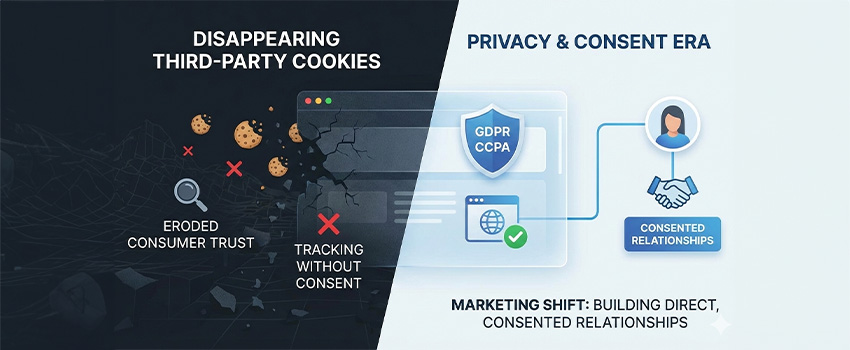
Third‑party cookies have eroded consumer trust by tracking users across sites without clear consent. In response:
- Browsers like Safari and Firefox have already blocked them by default, and Google has been planning their phase‑out in Chrome — though recent changes modified how this is happening.
- Privacy laws such as the EU’s GDPR and California’s CCPA have tightened data collection rules, making anonymous cross‑site tracking increasingly untenable.
The result? Marketers can no longer assume they’ll be able to follow users across the web by default — and must instead build direct, consented relationships with their audiences.
What Comes Next: Strategic Shifts in Marketing
The retirement of third‑party cookies doesn’t mean the end of digital marketing — it means a shift in methodology. Here are the major trends and solutions shaping the post‑cookie world:
1. First‑Party Data Is King
First‑party data — information that businesses collect directly from users (email sign‑ups, purchase history, site interactions) — becomes the most reliable source for personalization and targeting. Brands that build robust first‑party data engines will have a competitive edge.
A good strategy might include:
- Gated content (whitepapers, tools, webinars)
- Loyalty programs
- Account creation incentives
- Surveys and on‑site engagement mechanisms
These help you collect rich, permissioned data that fuels personalization without third‑party tracking.
2. Universal IDs and Authentication Solutions
To maximize reach without cookies, digital ecosystems are exploring universal identifiers such as hashed email IDs and login‑based identity solutions. These identifiers help connect a user’s behavior across environments — with consent and privacy protection.
3. Contextual Targeting Is Back
Context matters more than ever. Instead of tracking users across sites, contextual advertising places ads based on the content a user is consuming — increasing relevance without invading privacy.
4. Data Clean Rooms Enable Secure Collaboration
Data clean rooms are secure platforms where brands can collaborate on anonymized customer data with partners (publishers, platforms) without exposing raw user information. This allows for better audience insights and measurement in a privacy‑first environment.
5. Measurement and Attribution Are Evolving
Traditional last‑click and pixel‑based tracking models break down without cookies. Marketers are turning to:
- Conversion APIs that send event data server‑to‑server
- Media mix modeling (MMM) to understand overall channel impact
- Machine‑learning models and probabilistic attribution for deeper insight
These methods respect privacy while still offering actionable performance data.
New Rules for Marketers in a Cookieless World
The cookie phase‑out represents a broader shift in how brands must think about data, personalization, and trust. Here’s what marketers should prioritize:
Build Trust Through Transparency
Give users control over how their data is used. Transparency increases consent rates and long‑term loyalty.
Focus on Value Exchange
People are willing to share data when they see clear benefits — personalized experiences, exclusive content, better recommendations, and rewards.
Leverage New Technologies
From data clean rooms to AI‑powered analytics, modern tools can unlock rich insights without compromising privacy.
Shift to Sustainable Metrics
Instead of short‑term clicks and views, focus on qualitative, outcome‑based measurements: engagement, retention, lifetime value, and customer satisfaction.
Browser approaches: Safari, Firefox, Chrome
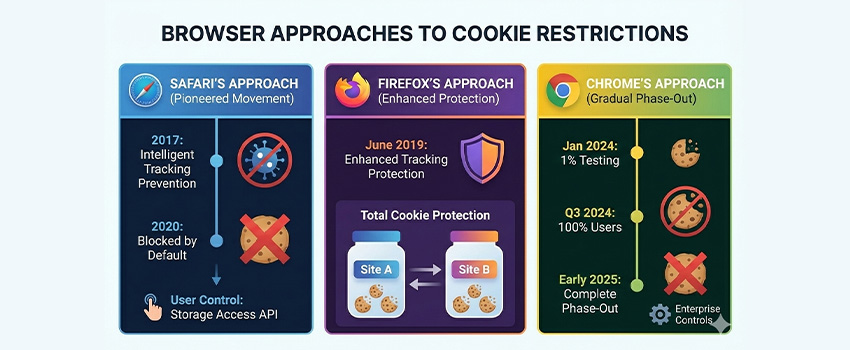
Each major browser handles cookie restrictions differently.
Safari pioneered this movement with Intelligent Tracking Prevention in 2017, blocking all third-party cookies by default since 2020. Any exceptions require user control through the Storage Access API.
Firefox began default blocking in June 2019 through Enhanced Tracking Protection. Total Cookie Protection gives third-party cookies separate “cookie jars” per site, preventing cross-site tracking.
Chrome controls 67% of global browser market share, taking a gradual approach. January 2024 marked the beginning, restricting cookies for 1% of users during testing. The plan escalates to 100% of users from Q3 2024, with complete phase-out scheduled for early 2025.
Enterprise Chrome users receive special consideration, with administrators getting specific controls over cookie deprecation in managed browsers.
Conclusion
The end of third‑party cookies isn’t the end of digital marketing — it marks a transformation toward privacy‑centered, customer‑first marketing. The brands that thrive will be those that collect data ethically, leverage first‑party insights, and embrace innovative measurement strategies.
In this new landscape, having a strategic partner can make all the difference. Web Dominance helps businesses navigate the post‑cookie era by building robust first‑party data strategies, crafting personalized marketing experiences, and implementing future‑proof analytics solutions. With expertise in SEO, content marketing, data capture, and customer engagement, Web Dominance empowers brands to stay competitive, trusted, and thriving in a cookieless world.