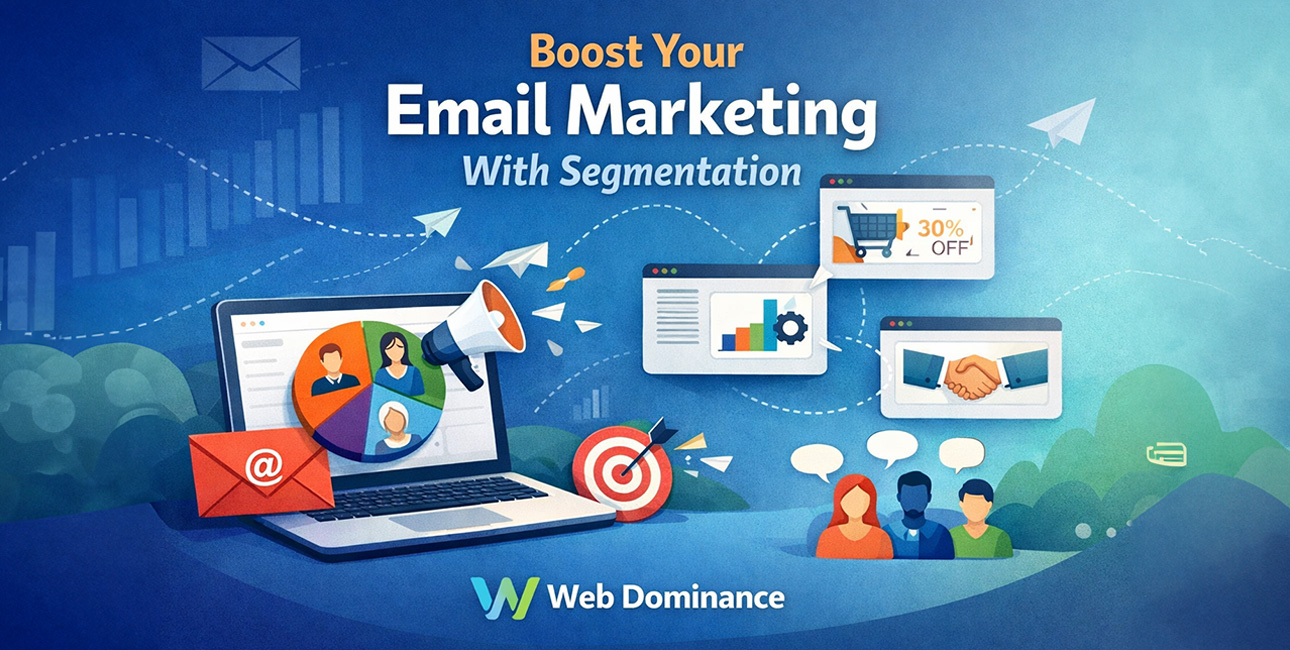
Email marketing remains one of the most powerful channels for small and medium-sized enterprises (SMEs) to reach customers directly. But sending the same generic message to your entire subscriber list rarely delivers results. The key to boosting engagement, conversions, and loyalty lies in segmented email lists and personalized customer journeys.
In this guide, we’ll walk local businesses and B2B service SMEs through effective segmentation strategies, show real-world examples of high-engagement campaigns, and explain how Web Dominance can help you implement a tailored email marketing strategy that drives results.
1. Why Email List Segmentation Matters
Segmentation allows you to divide your email subscribers into smaller, more targeted groups based on behavior, preferences, demographics, or purchase history.
Benefits include:
- Higher open rates: Personalized content grabs attention.
- Better click-through rates (CTR): Subscribers receive content that’s relevant to them.
- Improved conversions: Messages can be tailored to customer readiness and interests.
- Reduced unsubscribes: Irrelevant content is minimized, keeping your list healthy.
For example, a local café could segment customers by those who order breakfast versus lunch specials, while a B2B consultancy could segment leads by company size or decision-maker role to send highly relevant offers.
2. Common Ways to Segment Your Email List
There are multiple ways to segment subscribers. The key is to choose criteria that align with your business goals and customer behavior:
a) Demographics
- Age, gender, location, or company size.
- Example: A local boutique sending promotions based on city neighborhoods.
b) Behavior-Based Segmentation
- Track user actions such as website visits, clicks, past purchases, or email interactions.
- Example: A B2B service provider sending a follow-up email after a whitepaper download.
c) Purchase History / Transactional Data
- Segment based on past purchases or subscription tiers.
- Example: A local bakery emailing special offers to repeat customers who order cakes monthly.
d) Engagement Level
- Identify active subscribers vs. inactive ones.
- Example: Re-engagement campaigns with incentives for inactive users.
e) Lifecycle Stage
- Group subscribers based on their position in the customer journey: leads, prospects, or existing customers.
- Example: A consulting firm sending introductory resources to new leads while offering advanced case studies to long-term clients.
3. Building Personalized Email Journeys
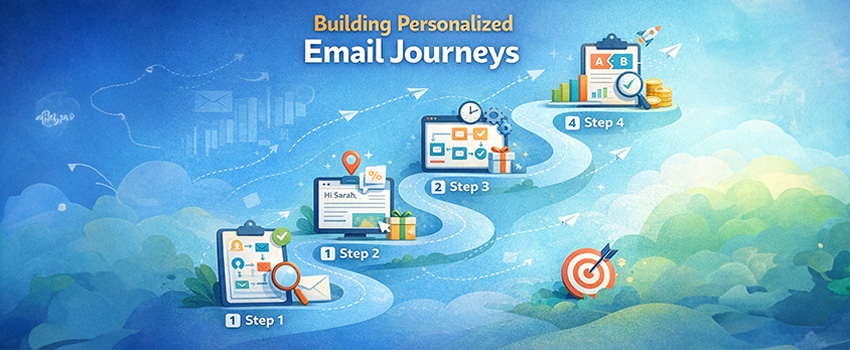
Once you’ve segmented your list, the next step is crafting personalized email journeys tailored to each group.
Step 1: Map the Customer Journey
- Define touchpoints and triggers for each segment.
- Example: After a first purchase, send a welcome series; for inactive subscribers, a re-engagement series.
Step 2: Personalize the Content
- Use subscriber names, location-based offers, or past behavior to make emails feel one-to-one.
- Example: “Hi Sarah, we noticed you loved our marketing tips—here’s an advanced guide you’ll enjoy.”
Step 3: Automate Your Campaigns
- Automation platforms can trigger emails based on actions, time, or events.
- Example: Send a follow-up email automatically after a webinar registration or product download.
Step 4: Test and Optimize
- Run A/B tests on subject lines, offers, or send times.
- Monitor open rates, CTR, and conversions to refine your segmentation strategy.
4. High-Engagement Segmentation Strategies
Here are examples of strategies that consistently drive engagement:
- Location-Based Promotions
- Behavioral Triggers
- VIP and Loyalty Programs
- Content Preference Segments
- Engagement Scoring
5. Mistakes to Avoid
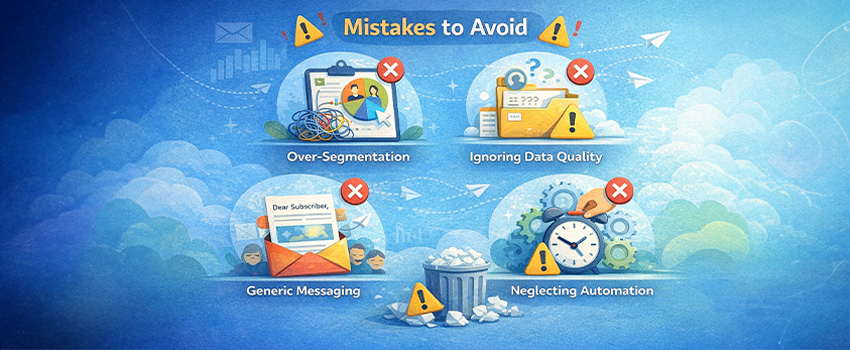
- Over-segmentation: Too many segments can make campaigns difficult to manage.
- Ignoring data quality: Outdated or incomplete subscriber info can lead to irrelevant emails.
- Generic messaging: Avoid sending the same message to all segments; personalization drives results.
- Neglecting automation: Manual sending misses opportunities to engage at the right moment.
6. How Web Dominance Can Help
Segmenting email lists and designing personalized journeys can be complex for SMEs. That’s where Web Dominance comes in.
Our expertise includes:
- Setting up robust segmentation strategies based on demographics, behavior, and lifecycle stage.
- Automating personalized email workflows that respond to customer actions in real time.
- Crafting content tailored to each segment for maximum engagement.
- Tracking performance and optimizing campaigns to improve ROI over time.
Whether you’re a local business wanting to drive foot traffic or a B2B service provider aiming to nurture leads, Web Dominance ensures your email marketing is strategic, personalized, and results-driven.
Conclusion
Effective email segmentation transforms your campaigns from generic blasts into personalized journeys that resonate with each subscriber. By grouping customers based on behavior, preferences, and engagement, SMEs can boost open rates, CTRs, and conversions while reducing unsubscribes.
With the right strategies and support from Web Dominance, your business can implement automated, high-engagement email journeys that drive growth, loyalty, and measurable results.