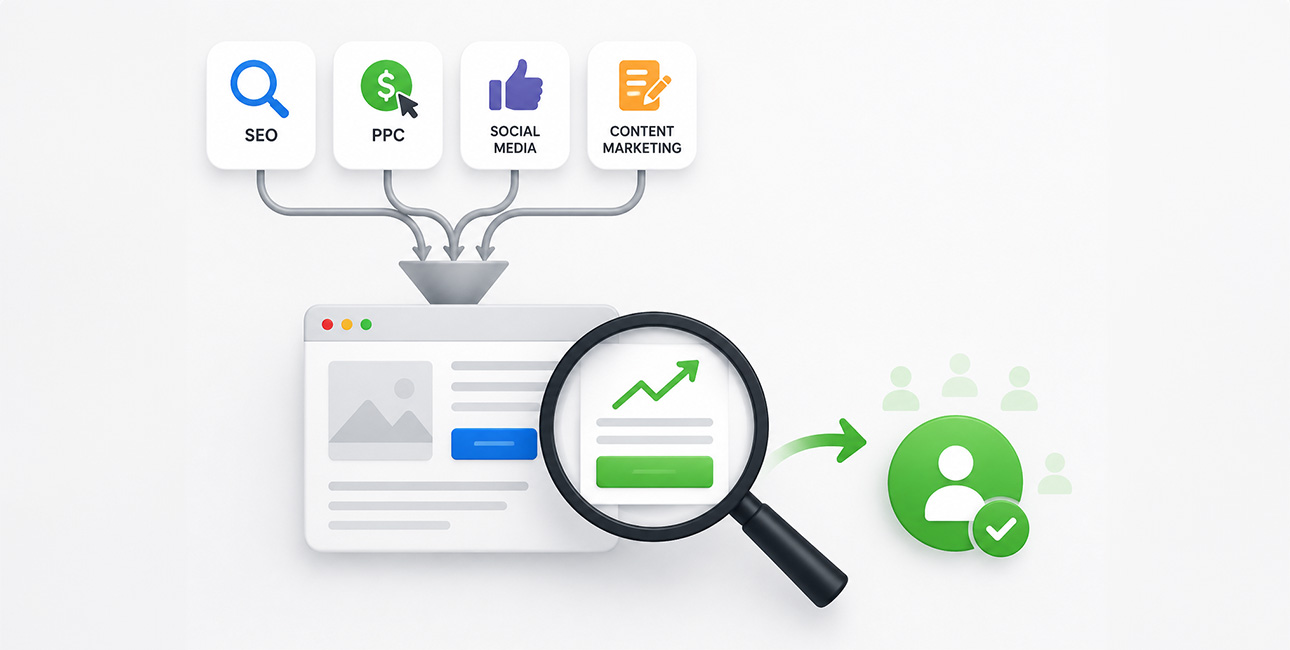
Driving traffic to a website is only half of the digital marketing equation.
The real measure of success is how effectively that traffic converts into qualified leads, sales opportunities, and long-term customers.
Many businesses invest heavily in SEO, PPC advertising, social media, and content marketing but overlook one of the highest-return marketing activities available: Conversion Rate Optimization (CRO).
A website that attracts 10,000 visitors per month but converts only 1% of them will generate far fewer business opportunities than a website converting 3–5% of the same traffic.
Improving conversion rates often produces faster and more cost-effective growth than increasing traffic alone.
This guide explains the fundamentals of website conversion optimization and shares 20 practical, research-backed strategies that can help businesses generate more leads without increasing advertising spend.
What Is Website Conversion Optimization?
Website Conversion Rate Optimization (CRO) is the systematic process of improving a website so that a higher percentage of visitors complete desired actions.
These actions may include:
- Requesting a consultation
- Completing a contact form
- Booking a demo
- Downloading a guide
- Calling the business
- Signing up for a newsletter
- Requesting a quote
- Starting a free trial
Rather than focusing solely on attracting more visitors, CRO focuses on making existing traffic more valuable.
Why CRO Matters More Than Ever
Customer expectations have changed dramatically.
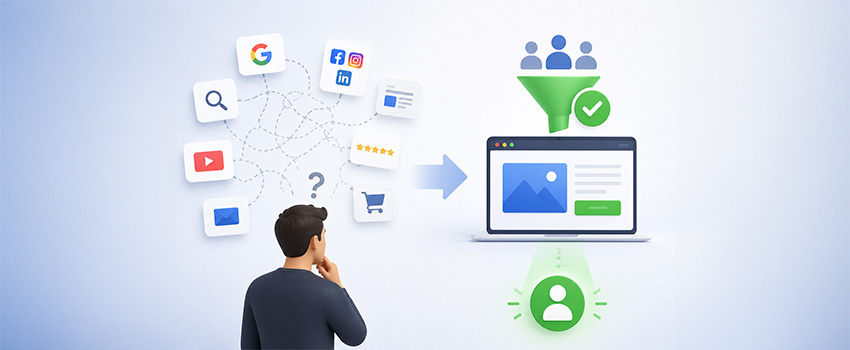
Today’s buyers compare businesses across multiple channels before making contact.
A visitor may:
- Discover your website through Google Search
- Ask an AI assistant about your company
- Read customer reviews
- Compare competitors
- Visit several service pages
- Check case studies
- Review pricing information
- Evaluate trust signals
Every interaction influences whether they become a lead.
Even small usability improvements can produce measurable increases in conversions.
The Mathematics of Conversion Optimization
Consider two companies.
Company A
- Monthly visitors: 15,000
- Conversion rate: 1.2%
- Monthly leads: 180
Company B
- Monthly visitors: 15,000
- Conversion rate: 3.6%
- Monthly leads: 540
Without spending an additional dollar on advertising, Company B generates three times more leads simply by improving website performance.
This illustrates why CRO frequently delivers one of the highest returns on marketing investment.
Understanding the Modern Customer Journey
Visitors rarely convert immediately.
Typical journeys include:
- Discover your brand
- Research solutions
- Compare alternatives
- Build trust
- Evaluate expertise
- Contact your business
Every page should help users move naturally toward the next step.
20 Proven Ways to Increase Website Leads
1. Create a Clear Value Proposition
Visitors should immediately understand:
- What you do
- Who you help
- Why you're different
- Why they should trust you
Avoid vague headlines.
Instead of: “Innovative Digital Solutions“
Use:
“SEO and Digital Marketing Strategies That Generate Qualified Leads for Growing Businesses“.
Clarity converts better than cleverness.
2. Improve Website Loading Speed
Research consistently shows that slower websites reduce conversions.
Visitors expect pages to load quickly on desktop and mobile devices.
Improve performance by:
- Compressing images
- Using modern image formats
- Reducing unnecessary scripts
- Implementing browser caching
- Optimizing hosting infrastructure
Speed influences both user experience and SEO.
3. Design Clear Calls-to-Action
Every important page should answer:
“What should visitors do next?”
Examples include:
- Request a Consultation
- Book a Discovery Call
- Download the Guide
- Get a Free Website Audit
- Contact Our Team
Avoid competing CTAs on the same page.
4. Reduce Form Friction
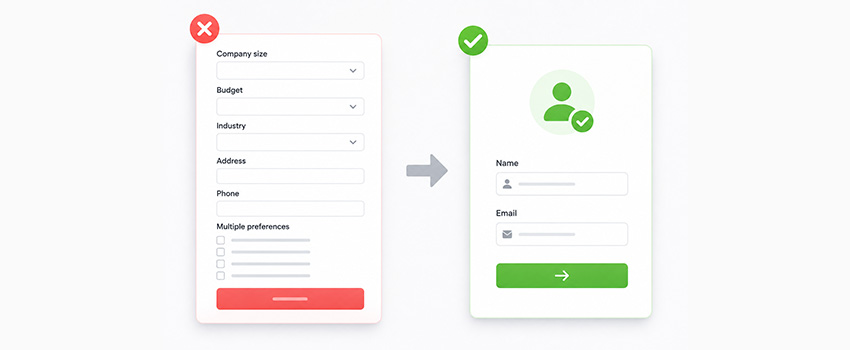
Every additional field creates more effort.
Ask only for information that is genuinely necessary.
Instead of requesting:
- Company size
- Budget
- Industry
- Address
- Phone
- Multiple preferences
Start with:
- Name
- Message
Longer forms can reduce completion rates unless additional information provides clear value.
5. Display Strong Trust Signals
Trust is one of the strongest conversion drivers.
Include:
- Client testimonials
- Case studies
- Certifications
- Awards
- Industry memberships
- Years of experience
- Client logos
- Review ratings
Visitors look for evidence before making contact.
6. Showcase Real Case Studies
Demonstrate measurable outcomes rather than making general claims.
Effective case studies include:
- Business challenge
- Strategy implemented
- Timeline
- Results achieved
- Client outcomes
Evidence builds confidence.
7. Use Professional Photography
Authentic company images often outperform generic stock photography.
Show:
- Team members
- Office environment
- Projects
- Products
- Services in action
Authenticity strengthens credibility.
8. Build Dedicated Landing Pages
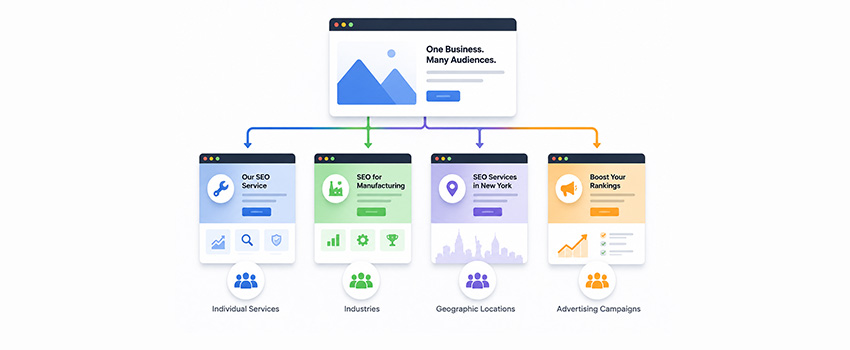
Different audiences require different messaging.
Create pages specifically designed for:
- Individual services
- Industries
- Geographic locations
- Advertising campaigns
Personalized landing pages typically convert better than generic homepages.
9. Improve Mobile Experience
Most industries now receive substantial mobile traffic.
Optimize:
- Navigation
- Buttons
- Form usability
- Readability
- Page speed
- Touch interactions
A frustrating mobile experience often leads to abandoned visits.
10. Simplify Website Navigation
Visitors should find important information quickly.
Avoid:
- Complex menus
- Excessive navigation levels
- Confusing labels
Good navigation reduces cognitive effort.
11. Answer Customer Questions Before They Ask
Every objection creates friction.
Include:
- Frequently Asked Questions
- Pricing guidance
- Process explanations
- Timelines
- Expected outcomes
Reducing uncertainty increases confidence.
12. Publish Helpful Educational Content
Content marketing supports conversions by building trust before sales conversations begin.
Examples include:
- Buying guides
- Tutorials
- Industry insights
- Comparison articles
- Resource libraries
Education creates informed prospects.
13. Strengthen Internal Linking
Guide visitors naturally toward conversion-focused pages.
For example:
Educational blog → Case study → Service page → Contact form
A structured journey improves engagement.
14. Add Social Proof Throughout the Website
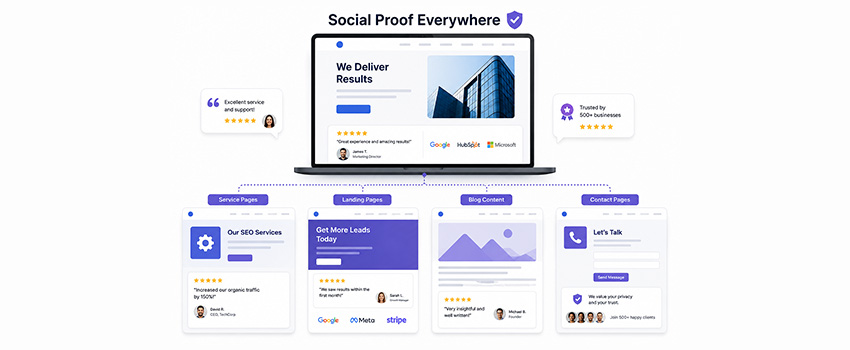
Don’t limit testimonials to one page.
Integrate trust elements across:
- Service pages
- Landing pages
- Blog content
- Contact pages
Consistent reinforcement builds confidence.
15. Use Live Chat Strategically
Some visitors have immediate questions.
Live chat can reduce hesitation by providing quick answers during the decision-making process.
However, responsiveness is essential.
An unanswered chat widget may reduce trust.
16. Optimize for AI Search Visibility
Modern customers increasingly discover businesses through AI-powered search experiences.
Clear structure, comprehensive answers, and authoritative content increase the likelihood that AI systems reference your website.
Better visibility can lead to higher-quality visitors who are already informed before arriving.
17. Continuously Test Headlines
Small wording changes can significantly influence user behavior.
Examples worth testing:
- Different value propositions
- CTA wording
- Page layouts
- Hero images
- Button placement
Continuous experimentation drives incremental improvements.
18. Reduce Visual Clutter
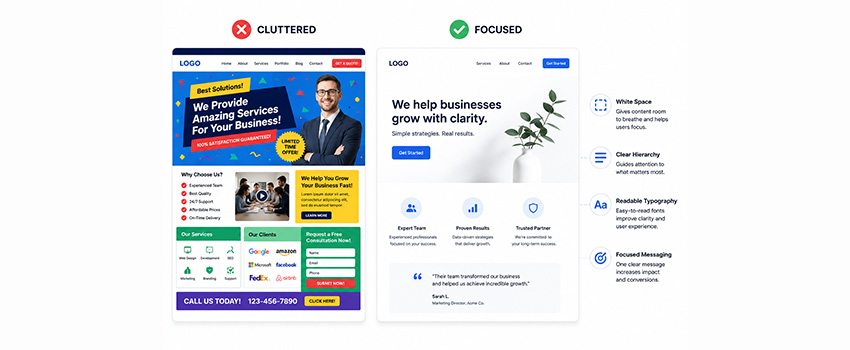
Every unnecessary design element competes for attention.
Prioritize:
- White space
- Clear hierarchy
- Readable typography
- Focused messaging
Simple interfaces often convert better than complex ones.
19. Measure Every Stage of the Funnel
Track:
- Landing page performance
- Scroll depth
- Form completion
- CTA clicks
- Conversion rate
- Bounce rate
- Exit pages
Measurement identifies opportunities for improvement.
20. Continuously Improve Through Data
Conversion optimization is not a one-time project.
Review performance regularly.
Identify friction points.
Implement improvements.
Measure results.
Repeat.
Sustained optimization creates long-term competitive advantages.
Original Insights From the Web Dominance Team
Across our website optimization projects, we consistently observe several patterns among high-converting websites:
- Visitors respond better to clear value propositions than creative but ambiguous messaging.
- Trust signals placed near calls-to-action often improve inquiry rates.
- Educational content increases lead quality by helping prospects understand available solutions before contacting the business.
- Businesses that continuously test and refine their websites generally achieve stronger long-term conversion performance than those treating their website as a static asset.
Although conversion rates vary by industry, continuous optimization consistently outperforms one-time redesigns.
Research Supporting Conversion Optimization
Research from Google emphasizes that page experience, usability, and helpful content contribute to stronger user engagement and long-term search performance.
According to Nielsen Norman Group, reducing friction and improving usability enables users to complete tasks more efficiently, positively influencing website performance.
Industry studies from HubSpot consistently highlight that optimized landing pages, personalized experiences, and educational content contribute to improved lead generation across B2B and B2C organizations.
Research published by CXL Institute also reinforces that evidence-based testing and continuous experimentation outperform assumptions when improving conversion rates.
Common Conversion Optimization Mistakes
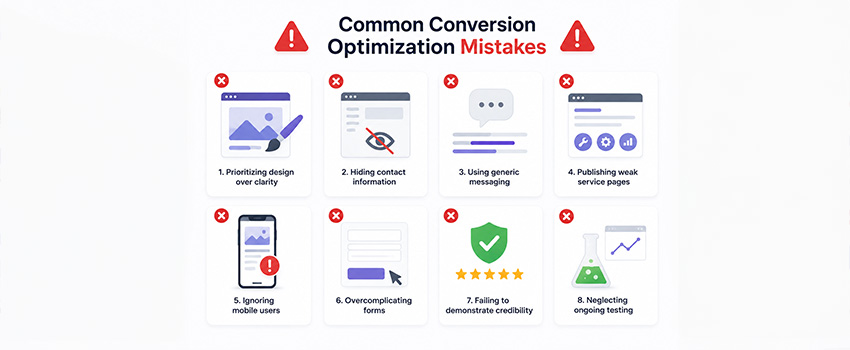
Many businesses unknowingly reduce conversions by:
- Prioritizing design over clarity
- Hiding contact information
- Using generic messaging
- Publishing weak service pages
- Ignoring mobile users
- Overcomplicating forms
- Failing to demonstrate credibility
- Neglecting ongoing testing
Addressing these issues often leads to measurable improvements without increasing marketing budgets.
Frequently Asked Questions
What is a good website conversion rate?
Conversion rates vary significantly by industry, traffic source, and business model. Rather than comparing your website to broad averages, focus on continuous improvement over your current baseline.
Should I invest in SEO or CRO first?
They complement each other. SEO brings qualified visitors to your website, while CRO increases the percentage of those visitors who become leads or customers. Businesses typically achieve the strongest results by investing in both.
How long does CRO take?
Some improvements, such as clearer calls-to-action or simplified forms, can produce results within weeks. More comprehensive optimization programs are ongoing processes that evolve with user behavior and business goals.
Does AI affect website conversions?
Yes. AI influences how users discover businesses and what they expect when they arrive. Visitors increasingly expect clear information, fast experiences, trustworthy content, and immediate answers. Websites that meet these expectations are better positioned to convert qualified traffic.
Conclusion
Increasing website traffic will always remain an important marketing objective.
However, generating more visitors without improving conversions often leads to diminishing returns.
The most successful businesses recognize that every website visit represents an opportunity.
By improving usability, reducing friction, strengthening trust, and continuously optimizing the customer journey, organizations can generate substantially more qualified leads from the same level of traffic.
Conversion Rate Optimization is not simply about changing button colors or rewriting headlines.
It is about understanding customer behavior, removing barriers to action, and creating digital experiences that make it easy for visitors to become customers.
In today’s competitive online environment, businesses that continuously optimize their websites will consistently outperform those relying solely on increased advertising spend.