

Large brands often dominate advertising, have bigger marketing budgets, and employ entire teams dedicated to digital growth. At first glance, it may seem impossible for a small business to compete.
The reality is different.
The internet has fundamentally changed how customers discover, evaluate, and choose businesses. Search engines, AI-powered search experiences, local SEO, content marketing, and social media have created opportunities for small businesses to earn visibility by demonstrating expertise rather than simply spending more money.
Businesses that understand customer intent, build trust, create valuable content, and optimize their digital presence can successfully compete against organizations many times their size.
This article explores practical strategies that help small businesses increase visibility, build authority, generate qualified leads, and create sustainable online growth.
The Myth That Bigger Always Wins
Many business owners believe large companies have an unfair advantage because they can spend millions on advertising.
While larger organizations certainly have advantages—including established brand recognition, larger teams, and greater marketing budgets—they also face challenges such as slower decision-making, complex approval processes, and less personalized customer engagement.
Small businesses often possess strengths that larger competitors struggle to replicate:
- Faster adaptation to market changes
- Direct relationships with customers
- Specialized expertise
- Authentic brand stories
- Flexible marketing strategies
- Deep understanding of niche markets
Today’s digital landscape rewards relevance, quality, and trust—not just size.
According to research from Google, users increasingly expect search results to deliver the most helpful and relevant information rather than simply the biggest brands. Likewise, AI-powered search experiences emphasize content that demonstrates expertise, authority, and usefulness.
The Digital Playing Field Has Changed
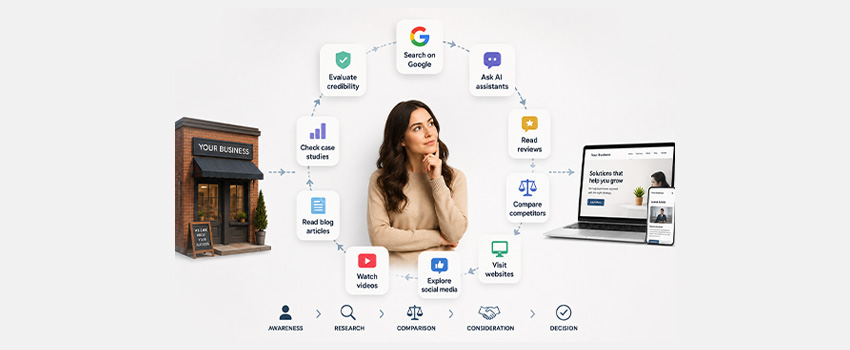
Twenty years ago, visibility often depended on advertising budgets.
Today, customers typically follow a much more complex buying journey:
- Search on Google
- Ask AI assistants
- Read reviews
- Compare competitors
- Visit websites
- Explore social media
- Read blog articles
- Watch videos
- Check case studies
- Evaluate credibility
Every interaction becomes an opportunity for a smaller business to earn trust.
Success is no longer determined solely by who spends the most—but by who provides the best customer experience throughout the buying journey.
Strategy Beats Budget
One of the biggest misconceptions in marketing is that success depends primarily on spending more money.
In reality, strategy determines how effectively every marketing dollar is used.
Consider two businesses:
Company A
- $500,000 annual marketing budget
- Generic messaging
- Weak website
- Poor SEO
- Limited content
Company B
- $50,000 annual marketing budget
- Strong SEO
- Helpful educational content
- Excellent user experience
- Highly targeted campaigns
Over time, Company B may generate significantly stronger organic growth because it continuously builds authority and attracts customers searching for relevant solutions.
Marketing efficiency often matters more than marketing volume.
Build a Strong Digital Foundation
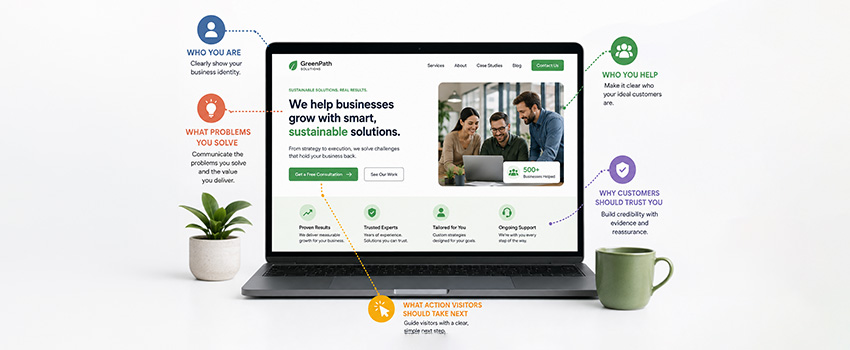
Competing online begins with having a professional digital presence.
Many small businesses invest heavily in advertising while neglecting the quality of their own websites.
Your website should clearly communicate:
- Who you are
- What problems you solve
- Who you help
- Why customers should trust you
- What action visitors should take next
Essential components include:
- Fast loading speeds
- Mobile-friendly design
- Clear navigation
- Secure HTTPS
- Professional branding
- Strong calls-to-action
- Accessible contact information
A well-designed website builds confidence before a customer ever contacts your business.
Content Marketing Levels the Playing Field
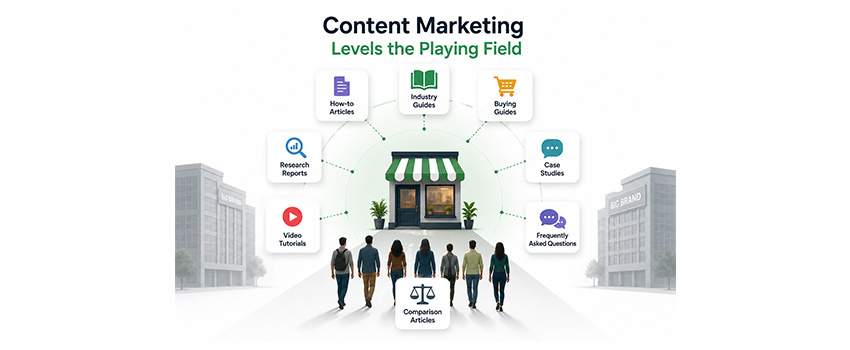
One of the greatest equalizers in digital marketing is content.
Every helpful article, guide, case study, or video becomes a long-term marketing asset.
Content allows businesses to answer customer questions before competitors do.
Examples include:
- Industry guides
- How-to articles
- Buying guides
- Case studies
- FAQs
- Research reports
- Comparison articles
Helpful content continues generating traffic long after publication.
Unlike advertisements, which stop producing results when budgets end, high-quality content can continue attracting visitors for years.
Focus on Search Intent Instead of Keywords Alone
Modern SEO has evolved beyond simply inserting keywords into web pages.
Search engines increasingly evaluate whether content genuinely satisfies user intent.
Instead of asking:
“What keyword should we rank for?“
Successful businesses ask:
“What problem is the customer trying to solve?“
For example:
Rather than targeting: “Website design“
Create comprehensive resources answering questions such as:
- How much does a business website cost?
- What features improve conversions?
- How long does redesign take?
- What mistakes reduce trust?
Answering real customer questions builds authority naturally.
Optimize for AI Search as Well as Traditional Search
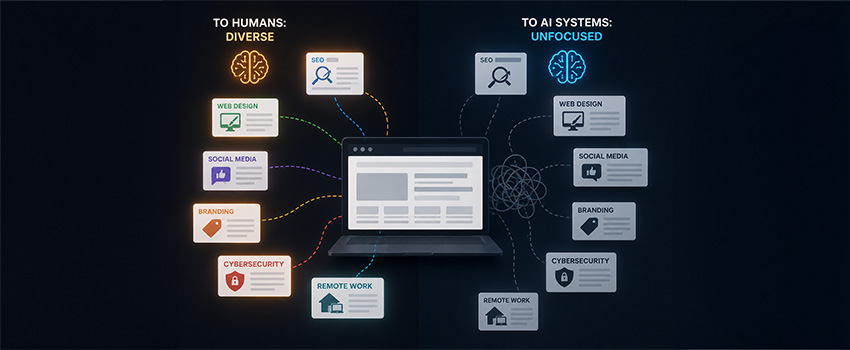
The way customers discover information is changing.
Many users now ask AI assistants questions before visiting search engines.
Businesses should therefore optimize content for both traditional SEO and AI-powered search experiences.
Helpful practices include:
- Clear article structure
- Descriptive headings
- Expert insights
- Accurate information
- Original analysis
- Well-organized content
- Structured data
- Comprehensive answers
Content that demonstrates expertise is more likely to be referenced by AI systems than shallow or duplicated content.
Local SEO Creates Significant Opportunities
Many small businesses primarily serve regional markets.
Local SEO enables these companies to compete effectively even against national brands.
Strong local optimization includes:
- Complete Google Business Profile
- Consistent business information
- Local citations
- Customer reviews
- Location-specific service pages
- Local backlinks
- Community involvement
When customers search for nearby services, relevance and proximity often outweigh company size.
Build Trust Before Selling
Trust is one of the most powerful competitive advantages available to smaller businesses.
Customers increasingly evaluate businesses before making contact.
They look for evidence such as:
- Client testimonials
- Reviews
- Case studies
- Certifications
- Awards
- Industry experience
- Expert authorship
- Company history
Every trust signal reduces uncertainty.
Leverage Customer Reviews
Many businesses still optimize primarily for rankings.
But rankings are becoming only one piece of the visibility puzzle.
The future requires a broader strategy.
Traditional SEO asks:
“How do I rank higher?”
AI visibility asks:
“How do I become the best answer?”
This subtle difference changes everything.
The websites that dominate AI search are increasingly those that:
- Publish original insights
- Build topical authority
- Create machine-readable content
- Demonstrate expertise
- Strengthen entity recognition
- Earn trust across the web
Visibility is no longer just about search engines.
It is about becoming part of the knowledge layer that powers AI systems.
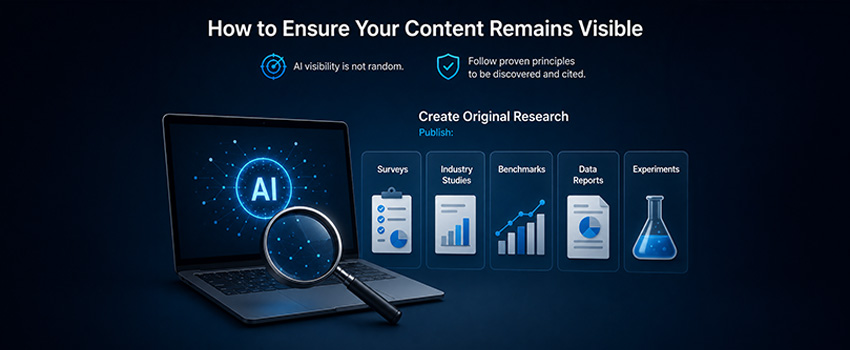
How to Ensure Your Content Remains Visible
The good news is that AI visibility is not random.
There are clear principles that increase your chances of being discovered and cited.
Create Original Research
Publish:
- Surveys
- Industry studies
- Benchmarks
- Data reports
- Experiments
Unique information creates defensibility.
Write for Retrieval
Structure content with:
- Clear definitions
- Direct answers
- Question-based headings
- Lists
- Frameworks
Help AI find information quickly.
Improve Technical Accessibility
Make sure your website is:
- Fast
- Crawlable
- Structured
- Well-linked
- Machine-readable
Technical friction reduces visibility.
Invest in Authority
Become known beyond your website.
Publish research.
Speak at events.
Contribute insights.
Earn mentions.
Build a recognizable entity.
Authority compounds over time.
The Future Belongs to Visible Knowledge

The internet is entering a new era.
The challenge is no longer creating content.
The challenge is creating content that AI systems can discover, understand, trust, and retrieve.
Most content will fail this test.
Not because it lacks effort.
But because it was built for yesterday’s search ecosystem.
The websites that thrive will be those that recognize a simple reality:
Visibility is no longer guaranteed by publication.
Visibility is earned through clarity, authority, trust, and unique value.
At Web Dominance, we believe businesses must begin preparing now.
Because in the age of AI-powered search, the greatest risk is not ranking lower.
The greatest risk is becoming invisible.
And invisible businesses do not get cited, discovered, or chosen.
The future belongs to organizations that become indispensable sources of knowledge.
Those are the brands AI will trust.
And those are the brands that will dominate the web.