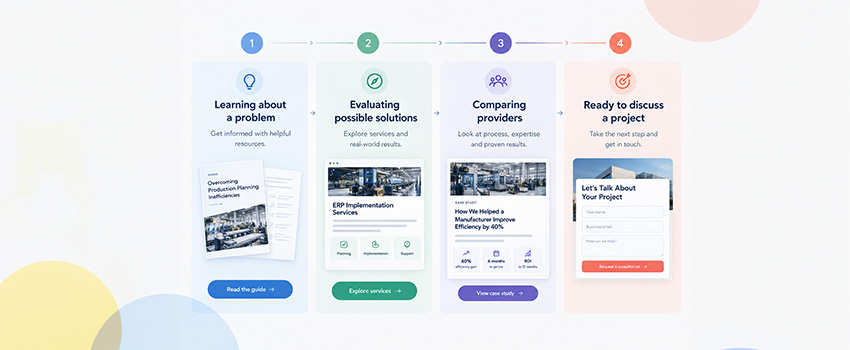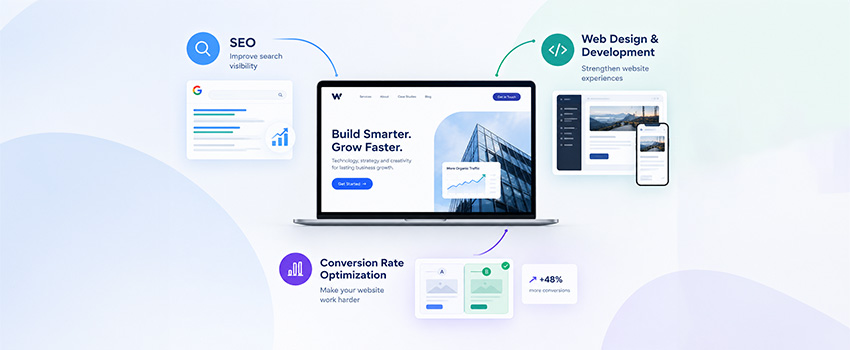
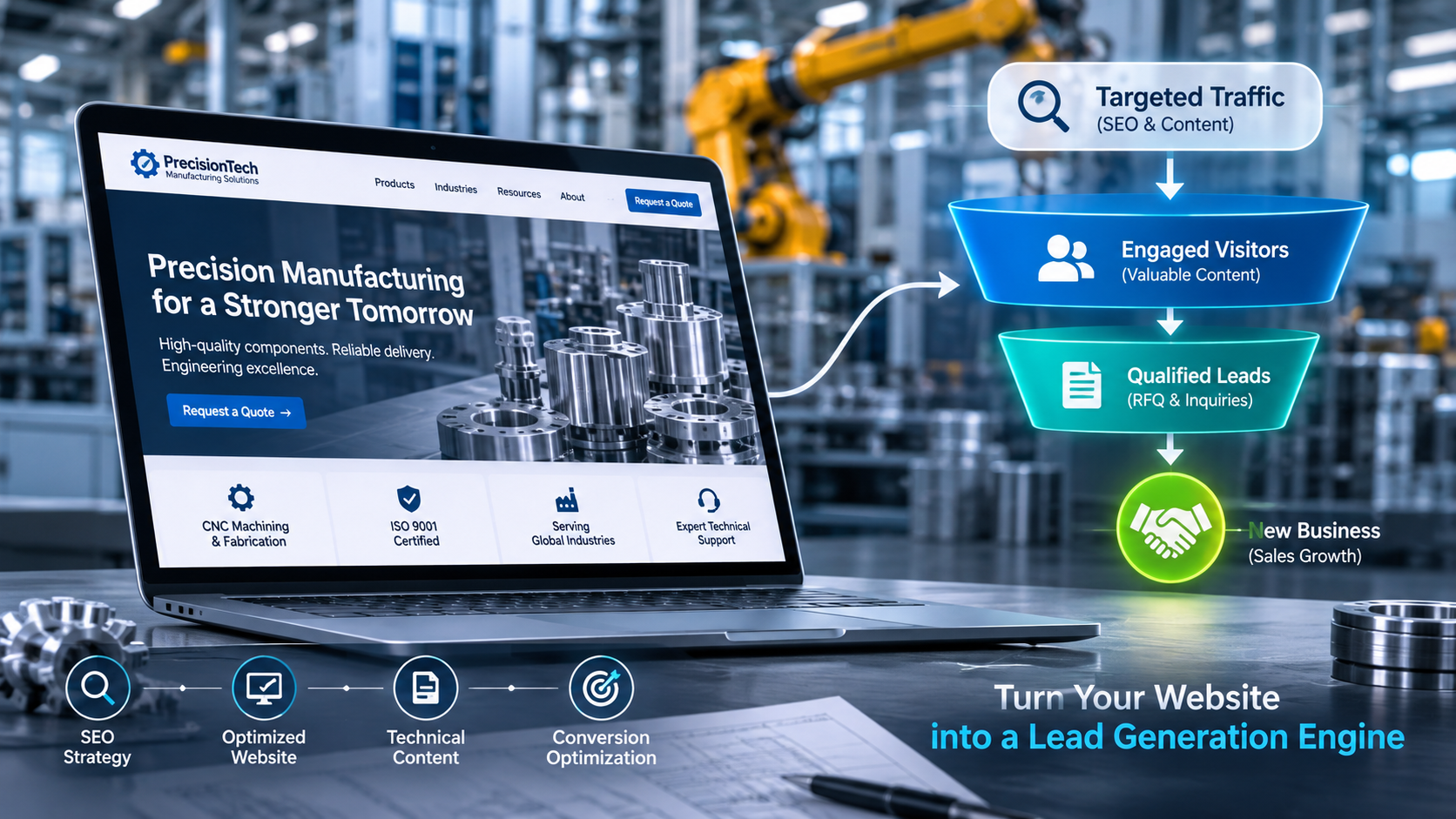
Industrial companies generate qualified B2B leads by helping the right buyers find their capabilities, assess whether they are a suitable supplier, and take a clear next step. This takes more than website traffic. It requires search visibility, useful technical information, a clear website, and a reliable enquiry process.
For manufacturers, engineering firms, and industrial suppliers, choosing a supplier is rarely an impulse decision. Buyers compare specifications, production methods, quality standards, delivery options, and prices. Different stakeholders may also be involved: engineers assess technical fit, procurement teams compare suppliers, and managers consider cost, risk, and long-term value.
Your website should support this process. It needs to explain what you make, show what you can deliver, answer key questions, demonstrate your experience, and make it easy to request information or a quotation.
What Is Qualified B2B Lead Generation?
B2B lead generation is the process of attracting potential business customers and encouraging them to enquire about your products or services. In industrial markets, a lead might be a manufacturer looking for a component supplier, an engineering firm seeking a production partner, a distributor considering a new product line, or an OEM evaluating manufacturing options.
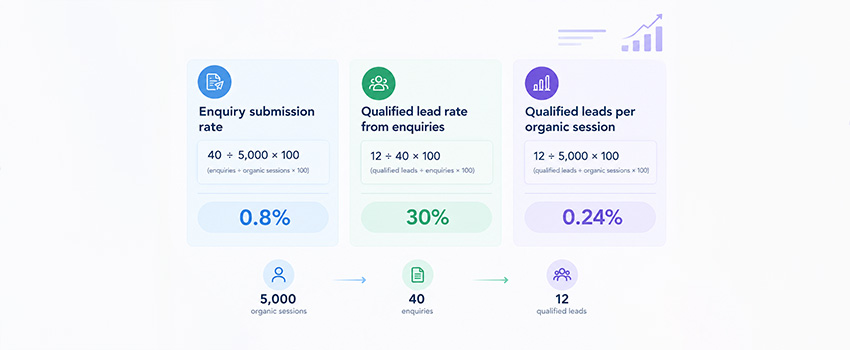
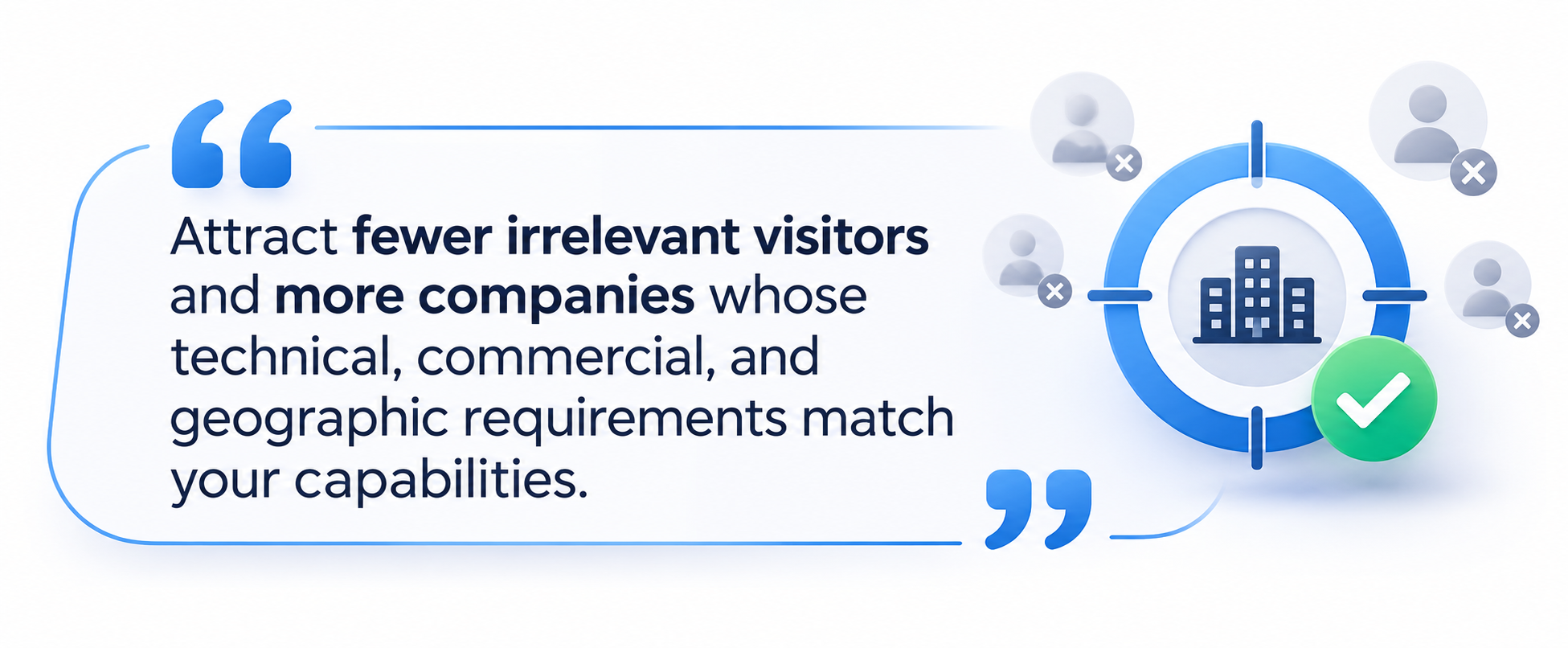
Not every enquiry is a qualified opportunity. A student downloading a catalogue, a small consumer requesting a one-off item, and a procurement manager asking for a production quotation may all appear in your analytics as conversions, but they have different commercial value.
A qualified B2B lead is a potential customer whose business profile, project requirements, and purchasing needs align with what your company can realistically provide.
Use clear qualification criteria so that marketing and sales teams evaluate enquiries consistently:
- Company fit: Does the company operate in an industry or market your business serves?
- Technical fit: Can you meet the required materials, dimensions, tolerances, standards, and production requirements?
- Project scope: Does the enquiry match your products or services and fall within your minimum and maximum order requirements?
- Commercial potential: Is there a realistic opportunity for a profitable project or ongoing business?
- Geographic fit: Can you serve the prospect’s location and meet its delivery requirements?
- Timing: Is the prospect preparing to purchase, planning a project, or exploring options for the future?
For example, a metal fabrication company may receive many enquiries but find that most involve small consumer orders outside its production scope. A smaller number of enquiries from equipment manufacturers or engineering firms may be more valuable because they match the company’s capabilities and production model.
The goal is not simply to increase enquiry volume. It is to increase the number of relevant enquiries that can progress into genuine sales opportunities.
Understand Your Target Customers and Decision-Makers
Before investing in SEO, paid advertising, or website improvements, define the businesses you want to reach. Industrial companies often serve several sectors, but each sector can have different technical, purchasing, and delivery requirements. Your marketing should reflect those differences.
Define your ideal customer profile
An ideal customer profile (ICP) describes the type of business most likely to benefit from your products or services. Define it using practical characteristics such as:
- Industry and business activity.
- Company size, production capacity, and typical order volume.
- Target country or region.
- Products, materials, or services required.
- Technical, quality, and certification requirements.
- Common operational or purchasing challenges.
- Potential for repeat orders or long-term cooperation.
For example, a precision machining company might focus on industrial equipment manufacturers, automotive suppliers, and engineering businesses that need custom components in prototypes or recurring production runs. This profile helps the company choose relevant keywords, build useful landing pages, and select advertising audiences.
Understand the people involved in the buying decision
Industrial purchases often involve several stakeholders. Each person looks for different information, so your website should make the right details easy to find.
- Procurement manager: Price, delivery, and supplier dependability.
- Engineer: Materials, specifications, precision, and compatibility.
- Production manager: Capacity, quality, efficiency, and production continuity.
- Business owner or director: Cost, risk, reliability, and long-term value.
- Project manager: Deadlines, coordination, and project scope.
An engineer should be able to find technical specifications without contacting sales. A procurement manager should be able to request a quotation easily. A business owner should quickly understand the company’s experience and why it may be a suitable partner.
Build Your Website Around Products, Capabilities, and Industries
Your website is often one of the first places potential customers visit when evaluating a supplier. It should do more than introduce the company: it should help buyers understand what you offer, compare your capabilities with their requirements, and decide whether to contact you.
Create a clear website structure
Industrial websites can contain large product catalogues, several manufacturing processes, technical documentation, and multiple target industries. If everything is placed on a few broad pages, visitors may struggle to find the information they need.
A practical structure might include the following sections:
- Homepage: An overview of core products and services, target industries, key differentiators, and primary calls to action.
- Products: Product categories, specifications, applications, available options, and supporting documentation.
- Manufacturing capabilities: Production processes, equipment, supported materials, available capacity, and quality-control checks.
- Industries: The markets you serve, typical applications, relevant capabilities, and examples of industry experience.
- Projects and case studies: Customer challenges, technical requirements, the solutions delivered, and verified project results.
- Quality and certifications: Applicable standards, inspection procedures, testing methods, and compliance information.
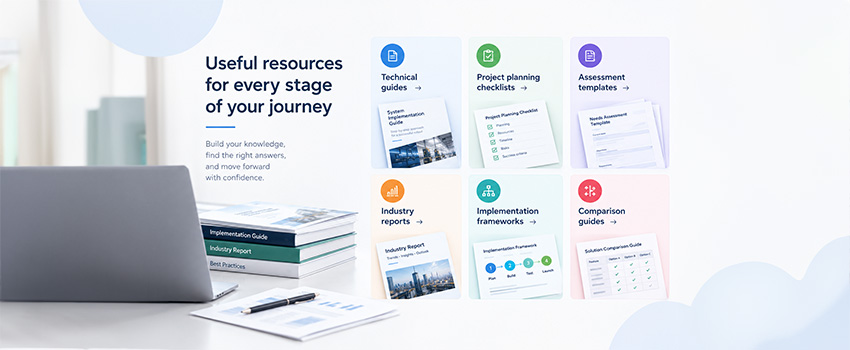
- Resources: Technical guides, product catalogues, datasheets, FAQs, and educational articles.
- Company: Company background, facilities, team, experience, and operating locations.
- Contact / Request a quote: Contact information, sales contact options, and enquiry or request-for-quotation (RFQ) forms.
This structure makes the website easier to navigate and helps search engines understand the relationship between your products, services, industries, and resources.
Give major services and capabilities their own pages
Consider a manufacturer that offers CNC machining, laser cutting, welding, metal forming, and assembly. If all five services are described briefly on one page, a buyer may not find enough detail to assess any one capability.
Create a dedicated page for each major service. A CNC machining page, for example, could explain:
- Available machining processes and equipment.
- Supported materials and component dimensions.
- Production tolerances, where verified and relevant.
- Prototype, small-batch, and recurring production options.
- Inspection and quality-control methods.
- Industries and applications served.
- Relevant project examples and technical documents.
End the page with a relevant action, such as “Request a CNC Machining Quote” or “Discuss Your Component Requirements.” Dedicated pages help buyers assess fit and allow you to target more specific search queries.
Create industry pages when the content is genuinely different
If your company serves several sectors, explain how your capabilities apply to each one. A metal component manufacturer might create pages for automotive, construction equipment, industrial machinery, energy, or agricultural machinery.
Each page should describe the applications you support, the requirements you understand, the relevant manufacturing capabilities, and any suitable project examples. Avoid creating near-identical pages that only replace one industry name with another. An industry page should answer questions that are specific to that market.
Make Your Manufacturing Capabilities Clear
A visitor should not have to guess what your company can manufacture, which processes it uses, or what types of orders it can handle. Yet industrial websites often rely on broad claims such as “high-quality manufacturing solutions,” “advanced technologies,” or “professional engineering expertise.” These phrases sound positive but provide little evidence.
Replace general statements with concrete, verifiable information about your products, materials, equipment, production limits, quality processes, and experience.
Turn broad claims into specific information
- Advanced machinery: Name the equipment and explain its process capabilities and relevant technical specifications.
- High production capacity: Share verified monthly or annual output figures and explain any factors that affect capacity.
- Excellent quality: Describe inspection procedures, testing methods, and relevant quality certifications.
- Fast delivery: Explain typical lead times, available delivery options, and factors that may affect scheduling.
- Extensive experience: Show years in operation, industries served, completed projects, or specialist expertise.
- Custom manufacturing: Specify supported materials, dimensions, tolerances, configurations, and order types.
Only publish specifications, capacity figures, and certifications that your company can verify. If a capability depends on material, geometry, order size, or project conditions, explain those limits rather than presenting one figure as universal.
Write a homepage headline that explains the offer
Your main headline should tell visitors what you provide and who you serve. For example:
- Headline: Precision Metal Components for Industrial Equipment Manufacturers
- Supporting text: “We manufacture custom metal components through CNC machining and precision fabrication, supporting engineering companies and industrial manufacturers from prototypes to recurring production.”
- Primary call to action: “Request a Manufacturing Quote.”
This is more useful than a headline such as “Engineering Excellence Through Innovation” because it identifies the company’s offering and intended audience immediately. Brand messaging can add personality, but it should not hide the core commercial proposition.
Use SEO to Reach Buyers Actively Searching for Suppliers
Search engine optimization (SEO) helps industrial companies appear when potential customers look for specific products, services, manufacturing processes, and suppliers. The aim is not to attract the largest possible audience. It is to reach businesses whose searches match your capabilities.
Target keywords that reflect buyer intent
Industrial buyers use a mix of product, service, supplier, application, technical, and location-based searches. These searches can indicate different levels of buying intent.
Someone searching for “what is CNC machining” may be learning about a process. Someone searching for “CNC machining supplier in Germany” may already be comparing suppliers. Your content should support both, but your most important service pages should focus on the searches with clear commercial relevance.
Build topic clusters around core services
Do not create a separate page for every small keyword variation. Group related searches around a meaningful product, service, or application, then create supporting content that answers specific questions.
Example content cluster
Main service page: CNC Machining Services. Supporting articles: CNC Milling vs. CNC Turning; Materials Used in CNC Machining; What Affects CNC Machining Costs; Preparing Technical Drawings for CNC Machining; and CNC Machining Tolerances. Each article should link to the main service page when that link helps the reader.
The service page explains the capability and encourages enquiries. Supporting articles help buyers understand processes and requirements. Internal links connect research with the relevant commercial page.
Optimize product and service pages
Each important page should have a descriptive title, one clear main heading, an accurate introduction, relevant specifications, supported materials and applications, original product or production images, links to related resources, and a relevant call to action.
Present essential information directly in the page where possible. Datasheets and catalogues are useful downloads, but they should supplement—not replace—the core product description and technical details.
Plan for local and international search
If you serve several countries, make your operating locations, target markets, delivery coverage, and language options clear. Use local keyword research and professionally localized content where there is a genuine audience in that market. Technical translations should use terms familiar to local engineers and procurement teams, not simply translate each word literally.
Publish Technical Content That Helps Buyers Evaluate You
Industrial buyers research materials, manufacturing processes, quality requirements, production costs, and supplier capabilities before making contact. Technical content can answer these questions while demonstrating your company’s knowledge.
The strongest topics come from real customer questions, sales conversations, quotation requests, and technical discussions—not from generic industry news alone.
Choose practical technical topics
Potential article topics include:
- CNC Machining vs. Injection Molding: Which Process Suits Your Project?
- How to Choose Materials for Industrial Components.
- What Information Should You Include in a Manufacturing RFQ?
- How Production Volume Affects Manufacturing Costs.
- Laser Cutting vs. Waterjet Cutting: Key Differences.
- How to Evaluate a Manufacturing Supplier.
Give readers details they can use
A useful article about CNC machining costs, for example, should explain the factors that influence a quotation: material type, component dimensions, design complexity, tolerances, production volume, setup and tooling, inspection requirements, packaging, and delivery.
You could include a worked example showing how setup costs are spread across different production quantities. State the assumptions clearly and label illustrative figures as examples rather than universal prices. Have technical content reviewed by someone with relevant manufacturing or engineering knowledge, especially when discussing specifications, materials, and standards.
Use case studies to demonstrate real experience
Case studies give potential customers evidence of what your company has delivered. A useful industrial case study should explain:
- The customer’s industry or application.
- The original manufacturing or operational challenge.
- The technical requirements and constraints.
- The production process or capabilities used.
- The solution delivered and the result.
For example, a metal manufacturer could explain how it produced custom components for industrial machinery, including the material, production process, inspection requirements, and project outcome. Include measurable results when they are available and approved for publication. If the customer must remain confidential, use an anonymized description with permission.
Improve Website UX and Technical Performance
A website can attract relevant visitors and contain detailed information, but still lose potential enquiries if visitors cannot find what they need. Industrial buyers may need to compare specifications, download documentation, check production capabilities, and contact a sales representative. The website should make each step straightforward.
Make navigation match the way buyers search
Organize the main menu around products, manufacturing capabilities, industries, resources, and company information. Keep high-value pages easy to reach and avoid making visitors navigate through unrelated sections to find a service or technical document.
For companies with large catalogues, useful filters may include product category, material, application, or technical attribute—provided the catalogue data is accurate and maintained. Use familiar labels rather than internal department names that buyers may not recognize.
Make technical information easy to access
A product page should bring the most important information together: a short description, specifications, dimensions, supported materials, applications, related products, a downloadable datasheet, and a clear enquiry option. Avoid requiring visitors to complete a long form just to see basic product information.
Improve speed, mobile usability, and reliability
Industrial buyers may visit your website from an office, production facility, warehouse, or mobile device. Important pages should load reliably and remain easy to use across screen sizes.
- Compress large images and use suitable modern formats.
- Reduce unnecessary scripts and improve hosting and caching where needed.
- Make menus, tables, forms, and buttons usable on mobile screens.
- Check that downloadable files open correctly and are clearly labelled.
- Use secure connections and keep software components maintained.
- Test key forms and contact routes regularly.
Technical performance is not separate from lead generation. If a product page loads slowly, a table is unreadable, or a form fails, the buyer may leave before contacting your team.
Create Clear Conversion Paths and Effective RFQ Forms
Once visitors find the right information, they need a clear next step. Not everyone is ready to request a quotation: some are comparing processes, while others have a defined project and technical drawings. Offer actions that match the visitor’s level of interest.
Match calls to action to the page
- Homepage: Explore Our Capabilities.
- Product page: Request Product Information.
- Manufacturing service page: Discuss Your Project.
- Technical resource: Download the Datasheet.
- Case study: Discuss a Similar Project.
- Industry page: Explore Industry Solutions.
- Contact page: Request a Quote.
Use specific language that tells visitors what will happen next. “Request a CNC Machining Quote” is clearer than a generic “Learn More” button.
Design an RFQ form around the first useful conversation
A request-for-quotation (RFQ) form helps potential customers explain their project and gives your sales team enough information to decide how to respond. Consider including:
- Name and business email: Identifies the contact and provides a direct way to respond.
- Company and country: Shows which organization is enquiring and where it is based.
- Product or service required: Clarifies which product or capability the prospect is interested in.
- Project description: Provides context about the application and its main requirements.
- Estimated quantity and timing: Helps assess the expected production volume and project timeframe, when known.
- File upload: Allows the prospect to attach drawings, specifications, or reference documents.
Do not make every field mandatory. An early-stage prospect may not know the final quantity or delivery date. Ask for essential information first and collect additional details during the follow-up conversation.
Reduce friction and test the whole process
- Use clear field labels and explain what information is required.
- Group related questions so the form feels manageable.
- Explain accepted file types and upload limits.
- Provide useful error messages and a clear submission confirmation.
- Make the form work on mobile devices.
- Tell the prospect what happens after submission, if your team has a defined response process.
Test the form from submission to delivery. Confirm that the correct team receives the enquiry, uploaded files are accessible to authorized staff, and the contact receives an appropriate confirmation. A form that fails silently can waste the traffic and marketing investment that brought the prospect to the website.
You can also offer alternative routes such as a technical consultation, catalogue request, or direct contact with a regional sales representative.
Use Paid Advertising to Reach Relevant Industrial Buyers
SEO can build long-term search visibility. Paid advertising can help you reach relevant prospects while organic visibility develops or when you want to promote a specific product, service, or market.
Use Google Ads for high-intent searches
Google Search Ads can reach people searching for particular products, services, and suppliers. Examples include custom metal fabrication, CNC machining suppliers, precision component manufacturing, and industrial equipment production.
Separate campaigns or ad groups by major service or product category. Each should lead to a landing page that matches the search. Someone searching for CNC machining should see the company’s CNC capabilities, supported materials, production options, relevant examples, and quotation route—not a general homepage that gives little detail about the service.
Assess campaign performance by the relevance of enquiries and the opportunities they create, not only by clicks or form submissions. Review search terms and exclude irrelevant traffic where appropriate.
Use LinkedIn to reach professional audiences
LinkedIn can help industrial companies reach professionals by role, industry, and company characteristics. Relevant audiences may include procurement managers, engineering directors, operations managers, production managers, business owners, and supply chain professionals.
Professional targeting alone does not make an audience qualified. Pair it with a useful offer, such as a technical guide, relevant case study, capability presentation, product catalogue, or technical consultation. For companies selling to a defined list of high-value accounts, account-based marketing (ABM) can align marketing and sales activity around selected businesses that fit the ideal customer profile.
Build landing pages for each campaign
A landing page should reflect the audience and offer in the campaign. For example, a campaign targeting automotive manufacturers could lead to a page that explains relevant production capabilities, supported materials, applicable quality standards, production capacity, relevant project examples, and how to request a quotation.
This gives the visitor a direct path from the search or advertisement to the information they need. It also makes it easier to assess which messages and campaigns generate suitable enquiries.
Use LinkedIn and Industry Channels to Build Relationships
Industrial buyers may discover suppliers through search engines, professional networks, trade exhibitions, industry publications, referrals, and business recommendations. Your digital channels should reinforce one another rather than operate as separate activities.
Publish useful content on LinkedIn
Use the company page to share practical information about your products and expertise. Suitable topics include new manufacturing capabilities, production process explanations, technical insights, quality-control practices, completed projects, product applications, industry developments, and trade exhibition updates.
Avoid making every post a sales promotion. Show what the company does, explain how its capabilities apply to real projects, and share information that helps potential customers evaluate suppliers. Engineers and technical specialists can also contribute through their professional profiles, drawing on their actual knowledge and experience.
Connect online and offline activity
- Add QR codes to printed catalogues that lead to relevant product or service pages.
- Link exhibition materials to technical resources and capability pages.
- Follow up with business contacts using relevant information from the event.
- Publish project updates after completing customer work, where permission allows.
- Use retargeting for relevant website audiences where it is appropriate and compliant.
A buyer may first meet your team at an exhibition, then review your website before requesting a quote. Another buyer may discover you through Google and later speak with a sales representative. Consistent information across these touchpoints helps build confidence.
Use Email Marketing and CRM to Nurture Leads
Industrial purchasing decisions can take time. A potential customer may download a catalogue today but only begin requesting quotations after a project is approved. A useful follow-up process helps your company stay relevant while the buyer evaluates options.
Segment contacts by their interests
Do not send the same message to every contact. Segment leads using information such as industry, product interest, geographic market, enquiry type, technical requirements, and stage in the purchasing process.
For example, someone who downloads a CNC machining datasheet may be interested in related process information and the company’s machining capabilities. Someone who submits an RFQ should receive direct sales follow-up rather than a generic educational email sequence.
Send helpful follow-up messages
- Requested information: Send the catalogue, guide, or datasheet the contact asked to receive.
- Relevant capabilities: Introduce related products, services, and production capabilities that match the contact’s interest.
- Supporting evidence: Provide a relevant technical guide, case study, or application example.
- Next step: Suggest a suitable way to discuss the project with a sales representative.
Keep each message connected to the prospect’s original interest. Follow applicable data protection and electronic marketing requirements in the markets where you operate.
Connect marketing with sales through a CRM
A customer relationship management (CRM) system helps the team manage contacts, enquiries, and sales follow-up. It can record enquiry sources, store communication history, assign leads to sales representatives, track opportunities, and support reporting.
Set clear ownership for new enquiries. Decide who reviews RFQs, who follows up with technical questions, and how the team records whether a lead is relevant. This prevents promising enquiries from being lost between marketing and sales.
Improve Visibility in AI-Powered Search
Industrial buyers can use AI-powered search tools to research manufacturing processes, compare solutions, and investigate potential suppliers. This gives companies another reason to publish clear, accurate, and useful information about their products and capabilities.
Treat AI search optimization as an extension of a sound search and content strategy—not as a replacement for SEO or a set of guaranteed ranking techniques.
Answer questions that buyers genuinely ask
Create useful answers to questions such as:
- Which materials are suitable for CNC-machined components?
- What information is needed for a manufacturing quotation?
- Which factors affect custom metal fabrication costs?
- How does production volume influence unit pricing?
- What quality documentation can a manufacturer provide?
Base answers on your company’s actual expertise and reliable technical information. Use descriptive headings, clear explanations, comparison tables, and diagrams when they help the reader. Keep important information available as readable website content rather than hiding the full explanation inside a PDF.
Structured data can help search engines interpret information about your organization, products, and pages when it is implemented accurately. However, schema markup, FAQs, or a particular formatting style cannot guarantee placement in AI-generated answers. Focus first on factual accuracy, useful content, clear site structure, and a strong overall website experience.
A Practical 90-Day Industrial Lead-Generation Plan
You do not need to launch every marketing activity at once. Start by improving the website and understanding your market. Then strengthen search visibility, publish supporting content, and introduce campaigns that can be measured.
Month 1: Website and market research
Goal: Build a clear foundation for attracting and converting the right buyers.
- Define the ideal customer profile and priority industries.
- Identify the decision-makers and the information they need.
- Review competitors and their product and service positioning.
- Audit website structure, technical performance, and search visibility.
- Improve navigation and the most important service and product pages.
- Review RFQ forms, contact routes, and lead ownership.
- Set up or validate conversion tracking.
Expected outcome: clearer positioning, more useful website pages, and a defined process for handling enquiries.
Month 2: SEO and content development
Goal: Help relevant buyers discover and evaluate your capabilities.
- Research commercial, technical, application, and location-based keywords.
- Optimize core product and service pages.
- Create industry pages where there is a distinct audience and relevant content.
- Publish technical guides based on real buyer questions.
- Develop case studies using approved project information.
- Connect related pages with useful internal links.
- Review localisation and international SEO requirements.
Expected outcome: stronger organic search foundations and more complete information for potential customers.
Month 3: Campaigns and conversion optimization
Goal: Generate relevant enquiries and improve the way they are managed.
- Launch Google Ads campaigns for selected high-intent searches.
- Create landing pages that match each major campaign or service.
- Build a LinkedIn content plan for target industries and decision-makers.
- Test paid professional campaigns where the audience and offer justify them.
- Introduce relevant email follow-up for opted-in contacts.
- Review form completion, lead quality, and sales feedback.
- Connect marketing sources and conversion events with CRM records.
- Adjust campaigns based on qualified enquiries and opportunities.
Expected outcome: a more measurable process for attracting, qualifying, and managing business enquiries. This roadmap is an implementation framework, not a guarantee of immediate leads or sales. Organic visibility and industrial purchasing decisions develop at different rates depending on competition, market demand, and the length of the sales cycle.
Common B2B Lead-Generation Mistakes to Avoid
Even companies investing in SEO, advertising, and website development can struggle to generate relevant enquiries. Review these common problems as part of your ongoing marketing work.
Focusing on traffic instead of lead quality
High traffic does not automatically mean more business. Prioritize searches and audiences that match your products, capabilities, and target markets.
Using generic website messaging
Broad claims do not help buyers assess a supplier. Explain what you manufacture, which processes you use, and what requirements you can meet.
Putting every service on one page
A broad service list may not answer technical questions. Give major capabilities their own useful pages.
Hiding important technical information
Make relevant specifications, materials, quality information, and documentation easy to find.
Making enquiry forms too complicated
Ask for the information needed to start a conversation. Collect more detailed requirements during follow-up.
Sending all advertising traffic to the homepage
Use landing pages that match the promoted service, product, audience, and search intent.
Failing to follow up on enquiries
Assign each relevant enquiry to an owner and track the next action in your CRM.
Publishing new content while old pages become outdated
Review specifications, service descriptions, links, and technical documents regularly.
Turn Your Website into a Source of Qualified B2B Leads
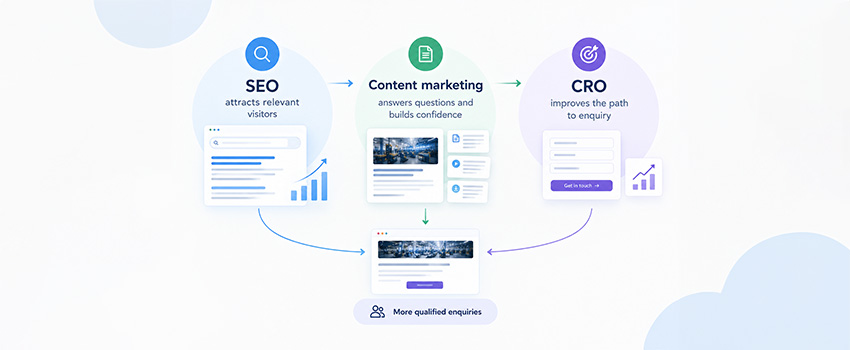
Generating qualified B2B leads requires more than publishing product information or running advertising campaigns. Industrial companies need a connected digital marketing strategy that helps the right buyers discover their capabilities, assess their expertise, and understand why the company may be a suitable supplier.
A well-structured website makes information easier to find. Clear messaging explains the offer. SEO helps relevant buyers discover the company. Technical content demonstrates expertise. Good UX and conversion paths make it easier to request a quote. Paid campaigns, professional networks, email, and CRM processes help develop and manage the opportunity.
The goal is not simply to attract more website visitors. It is to help the right businesses find your company, understand what you can deliver, and take the next step toward a commercial conversation.
Need a more effective digital marketing strategy for your industrial business?
Web Dominance brings together website development, SEO, content marketing, paid advertising, and digital marketing strategy to help businesses strengthen their online presence and reach relevant audiences. Explore the services at web-dominance.com and discuss how a coordinated digital strategy can support your lead-generation goals.